
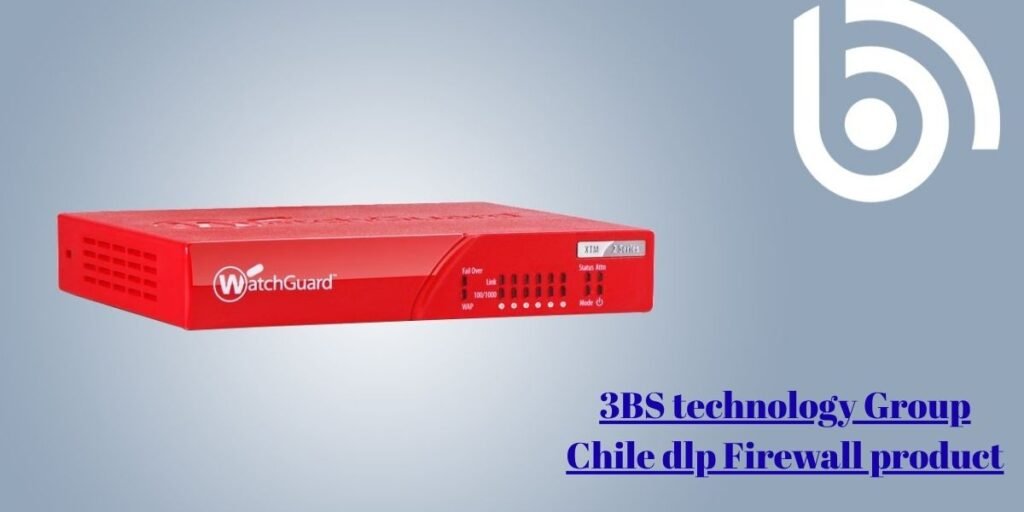
Protecting confidential business information across modern corporate networks has become increasingly complex. Organizations operate across interconnected environments where sensitive data routinely moves between local employee workstations, cloud storage services, remote connections, and third-party SaaS applications.
Relying solely on traditional perimeter defense mechanisms like standard network firewalls leaves critical operational blind spots. While a perimeter firewall controls which connections enter or exit a corporate network, it rarely inspects the actual context or sensitivity of the data contained within authorized outbound traffic. Consequently, businesses require a dual-layer strategy that combines robust network access controls with specialized data protection policies to prevent unauthorized disclosures.
3Bs Technology Group is a Chile-based IT security and consulting company recognized for delivering specialized Data Loss Prevention (DLP) strategies and managed infrastructure protection. This guide examines the firm’s documented background, the operational mechanics of DLP and firewall technologies, how these security layers intersect, and the practical evaluation criteria decision-makers should apply when implementing enterprise data protection.
What Is 3Bs Technology Group Chile?
Establishing an accurate corporate profile requires reviewing verified industry records rather than relying on unconfirmed market speculation. 3Bs Technology Group operates within the IT Services and IT Consulting sector, maintaining its primary corporate registration in Santiago, Chile.
According to publicly accessible corporate profiles, including its official LinkedIn registry, the company was established in 2007. The firm positioned itself to assist regional businesses in navigating cybersecurity challenges by designing, implementing, and supporting managed IT security solutions tailored to mid-market and enterprise operations.
The company explicitly highlights Data Loss Prevention (DLP) as a core area of technical specialization. Rather than positioning itself as a consumer retail brand, 3Bs Technology Group operates primarily as a security solutions integrator and IT consultancy. Its business model focuses on evaluating client infrastructure, deploying appropriate data defense frameworks, and managing corporate security controls to reduce operational risk.
What Is Data Loss Prevention (DLP), and Why Does It Matter to Businesses?
Data Loss Prevention refers to a structured combination of software technologies, technical controls, and organizational policies designed to detect, monitor, and block sensitive information from leaving an authorized corporate boundary.
Unlike traditional security software that focuses primarily on keeping external threats out, DLP focuses inwardly on tracking and controlling how data is handled by internal users, applications, and automated processes. Modern businesses rely on DLP framework policies to safeguard several critical categories of digital assets:
- Customer Records and PII: Personally Identifiable Information including national identification numbers, banking details, full names, and home addresses protected under privacy regulations such as Chile’s Law No. 19,628 and international frameworks like GDPR.
- Financial and Payment Data: Corporate bank details, credit card numbers subject to PCI-DSS standards, audit logs, and internal financial statements.
- Human Resources Files: Confidential employee evaluations, payroll data, medical records, and internal dispute documentation.
- Intellectual Property: Proprietary software source code, industrial designs, chemical formulas, manufacturing processes, and unreleased research data.
- Strategic Corporate Documents: Mergers and acquisitions documentation, internal legal correspondence, board minutes, and non-disclosure agreements.
Deploying DLP controls addresses three distinct risk vectors: accidental exposure, where an employee mistakenly sends sensitive files to an unintended recipient; insider leakage, where an employee intentionally exfiltrates corporate data for personal or competitive gain; and compromised credentials, where an external attacker uses stolen account details to quietly download internal databases.
How DLP Technology Identifies and Prevents Data Leakage
Implementing a functional DLP defense involves a sequence of technical phases that classify data, monitor movement, and automatically enforce protection rules across network infrastructure and user endpoints.
Organizations begin by defining data discovery jobs that index local drives, network shares, databases, and cloud repositories. The system uses pattern matching, regular expressions, exact data matching (EDM), and file fingerprints to categorize files based on their sensitivity level.
Once files are categorized, DLP agents continuously monitor data transactions occurring across various channels:
- Endpoints: Tracking copy-paste operations, local screen captures, print jobs, and file transfers to USB thumb drives or external hard drives.
- Network Channels: Inspecting outbound web traffic (HTTP/HTTPS), file transfers (FTP/SFTP), and cloud uploads.
- Email Gateways: Analyzing subject lines, message bodies, and attachments sent via corporate email platforms.
When a user attempts a transfer that violates established policy—such as attempting to upload an unencrypted file containing customer credit card numbers to a personal cloud storage site—the DLP system triggers a pre-configured enforcement action.
Depending on the severity of the rule match, the software can log the activity for administrative audit, display a pop-up warning requiring the user to justify the action, quarantine the file for security manager review, or outright block the outbound transmission in real time.
Security Operations Center (SOC) teams evaluate generated alerts to determine whether an event represents a legitimate business process that requires policy refinement or a genuine security incident requiring immediate containment.
How Firewall Protection and DLP Work Together
Understanding how Data Loss Prevention and firewall systems interact requires recognizing their distinct roles within an enterprise security architecture. While both technologies analyze network traffic, they operate at different layers of inspection and serve complementary operational goals.
A network firewall functions as an infrastructure gatekeeper. It continuously inspects packet headers, IP addresses, port numbers, and protocol types to control network traffic entering or leaving a network segment. Next-Generation Firewalls (NGFW) expand this capability by inspecting application-level traffic (Layer 7) and blocking access to known malicious domains or unauthorized software applications.
Conversely, DLP operates at the content and data level. Instead of simply checking where traffic is going, DLP inspects the specific payload of that traffic to determine whether it contains proprietary source code, patient records, or financial files.
| Security Layer | Primary Inspection Focus | Core Operational Responsibility |
| Network Firewall | Packet headers, IP routing, protocols, application identity | Controls network connections and prevents unauthorized access to systems. |
| Data Loss Prevention (DLP) | File payloads, text content, data patterns, user permissions | Identifies, monitors, and blocks unauthorized transfers of sensitive data. |
These systems frequently coordinate to enforce comprehensive security policies. For example, a company firewall might permit an employee to establish an outbound HTTPS connection to a legitimate corporate cloud storage platform. However, if that employee attempts to upload a folder containing unencrypted payroll records, the DLP engine detects the sensitive content within the traffic stream and blocks the transfer before it completes.
Many modern cybersecurity platforms integrate basic DLP pattern-matching rules directly into Next-Generation Firewalls. While this built-in capability offers baseline protection against common data leaks, complex enterprise environments often pair network firewalls with dedicated endpoint and cloud DLP engines to ensure comprehensive coverage.
Which Business Security Risks Can DLP and Firewalls Help Address?
Combining firewall protection with Data Loss Prevention controls allows organizations to mitigate diverse operational, technical, and regulatory risks:
- Accidental Internal Exposure: Employees frequently share internal documents containing sensitive customer details or passwords via unencrypted email or public messaging channels. DLP engines detect these patterns and block the messages before they leave the gateway.
- Malicious Exfiltration by Insiders: Departing employees or disgruntled insiders may attempt to download corporate intellectual property or customer lists to personal cloud storage or external USB drives. Endpoint DLP policies block unauthorized local copying and track file access logs.
- Malware Command-and-Control Communication: If a workstation becomes infected with malware, firewalls block unauthorized outbound connections to known malicious servers, while network DLP prevents the malware from transmitting harvested credentials or internal database records.
- Unapproved Cloud Application Usage (Shadow IT): Employees often utilize unvetted third-party web tools to edit or convert corporate files. Firewalls restrict access to unauthorized file-sharing websites, while DLP prevents sensitive file uploads to unapproved domains.
- Regulatory Non-Compliance: Operating without granular data controls exposes businesses to massive statutory fines under global data privacy mandates such as GDPR, PCI-DSS, and local regulations like Chile’s Law No. 19,628.
Neither technology acts as a complete standalone silver bullet. Effective cybersecurity relies on defense-in-depth, combining firewalls and DLP with strong identity management, multi-factor authentication, and employee awareness training.
What Should Businesses Evaluate When Choosing a DLP or Firewall Solution?
Selecting data protection tools requires evaluating technical, organizational, and operational considerations to ensure long-term effectiveness:
- Data Visibility and Classification Precision: Evaluate whether the solution accurately indexes both structured databases and unstructured document types across your environment. High false-positive rates disrupt daily business operations, while false negatives leave data exposed.
- Policy Customization and Granularity: Ensure administrators can tailor rules based on user roles, department structures, device ownership, and specific data types rather than relying solely on rigid, factory-default templates.
- Multi-Environment Coverage: Verify that protection policies extend consistently across physical office endpoints, remote worker laptops, internal network segments, and cloud infrastructure.
- Integration with Existing IT Systems: Assess how seamlessly the platform integrates with your existing Active Directory or identity providers, SIEM logging tools, email gateways, and current network equipment.
- Operational Overheads and Total Cost of Ownership (TCO): Account for ongoing management costs, administrative training requirements, software licensing updates, and hardware maintenance alongside the initial purchase price.
How DLP Implementation Fits Into a Business Security Strategy
Deploying Data Loss Prevention requires a phased approach focused on business alignment rather than an immediate enforcement rollout that halts business workflows.
A structured implementation roadmap includes:
- Inventory and Assessment: Identify where critical data resides across the organization and establish clear definitions of what constitutes sensitive information.
- Policy Definition: Draft clear corporate data-handling guidelines that govern user access rights, acceptable file sharing channels, and encryption requirements.
- Initial Audit Mode Deployment: Run DLP software in monitoring mode first to observe data flows and refine rule accuracy without actively blocking legitimate employee tasks.
- Gradual Enforcement Rollout: Enable active blocking and quarantine controls progressively, starting with high-risk channels like unencrypted web uploads and removable USB storage.
- Employee Education and Feedback: Utilize interactive DLP prompts that educate employees in real time when a policy violation occurs, fostering a security-conscious company culture.
- Continuous Review and Optimization: Regularly audit policy violation logs, update data classification rules as business needs evolve, and refine inspection patterns.
Is 3Bs Technology Group a Product Manufacturer or Security Solutions Provider?
Understanding the precise role of 3Bs Technology Group is essential for organizations evaluating regional security partners in South America.
Available public corporate registries, including its official LinkedIn organization profile, classify 3Bs Technology Group as an IT Services and IT Consulting firm based in Santiago, Chile. The company lists Data Loss Prevention among its core areas of technical expertise.
Prospective clients should recognize the distinction between a software developer and a security system integrator:
- Integrator and Managed Service Provider: The company acts primarily as an IT security consultancy and managed service provider. It helps businesses assess vulnerability profiles, select enterprise security software, configure network architectures, and manage security operations.
- Third-Party Vendors: Publicly available corporate data does not establish that 3Bs Technology Group manufactures proprietary firewall hardware or standalone DLP software suites under its own exclusive brand name. Integrators typically partner with established global technology vendors (such as Fortinet, Palo Alto Networks, Symantec, or Trellix) to deploy and manage enterprise DLP and firewall appliances for local clients.
When engaging with 3Bs Technology Group or any regional IT consulting partner, organizations should request direct clarification regarding vendor partnerships, hardware licensing, software support agreements, and managed service level parameters (SLAs).
Frequently Asked Questions
What is 3Bs Technology Group in Chile?
It is an IT services and consulting firm headquartered in Santiago, Chile, specializing in managed IT security, infrastructure support, and Data Loss Prevention implementations for businesses.
What does 3Bs Technology Group specialize in?
The firm highlights Data Loss Prevention (DLP) alongside broader IT security consulting, network administration, and managed business technology services.
What is DLP in cybersecurity?
Data Loss Prevention (DLP) is a system of security technologies and administrative policies that monitor, detect, and block sensitive data from being shared, lost, or accessed without authorization.
How is DLP different from a firewall?
A firewall controls network access and blocks unauthorized connection attempts. A DLP system inspects actual file content within authorized connections to prevent sensitive information from being transferred out of the network.
Can a firewall prevent data loss?
Next-Generation Firewalls can block unauthorized applications and inspect traffic for basic sensitive patterns. However, comprehensive data loss prevention requires dedicated DLP capabilities to monitor endpoint file copying, USB access, and detailed document content.
Do businesses need both DLP and firewall protection?
Yes. Firewalls secure the network boundary against unauthorized entry, while DLP monitors internal user actions and file movements to prevent sensitive information from leaking out.
Does 3Bs Technology Group manufacture its own firewall product?
There is no verified public evidence indicating that 3Bs Technology Group manufactures proprietary firewall hardware; the company operates primarily as an IT security integrator and services provider.
Where is 3Bs Technology Group located?
The company maintains its primary corporate headquarters in Santiago, Chile.