
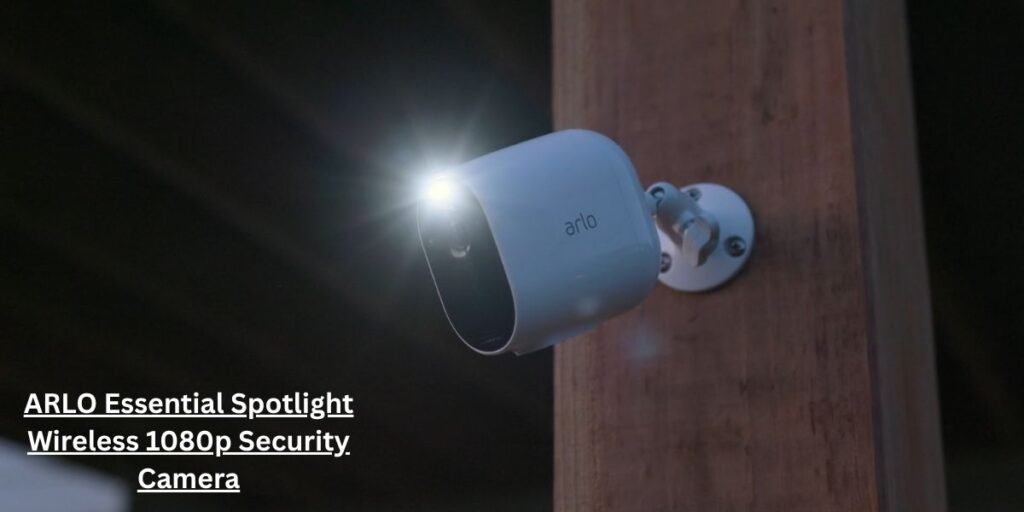
Modern perimeter security relies heavily on quick response times and dependable video capture. The Arlo Essential Spotlight Camera enters the residential market as a self-contained, entry-tier hardware option designed to eliminate setup complexity while providing core monitoring capabilities without requiring a centralized hub.
Arlo Essential Spotlight Camera
The Arlo Essential Spotlight Camera carries the official model designation VMC2030. It records video at 1080p Full HD resolution with a fixed 130-degree diagonal field of view. It features an integrated LED spotlight situated directly above the main camera lens, which powers its color night vision capability when triggered after dark.
Power comes from an integrated internal rechargeable battery encased within a weather-resistant housing built to withstand rain, heat, and cold exposure. Network communications connect using a direct 2.4GHz Wi-Fi connection, removing the necessity for an intermediary base station. Audio functions include full-duplex two-way audio alongside an integrated emergency siren that can be activated automatically or manually via the mobile application.
What the Arlo Essential Spotlight Camera Offers
Home security needs change depending on the layout of a property, the distance to high-traffic areas, and entry access points. The VMC2030 tackles these demands by providing key visual and audio tools in a compact frame.
Recording in 1080p resolution yields a frame size of 1920×1080 pixels. In practical home deployment, this resolution provides clear recognition of facial features and vehicle license plates at distances up to approximately 15 feet to 20 feet from the lens. The 130-degree diagonal lens opening covers a wide horizontal spread. Positioning the unit near a standard entryway or single-car garage door allows it to capture the entire porch or driveway area without creating severe fisheye edge distortion. Within the broader lineup from this brand, this 1080p camera serves as an entry-level tier below higher-tier 2K models like the Arlo Essential XL 2K or Arlo Pro 5S 2K and premium 4K options like the Arlo Ultra 2.
The inclusion of an integrated LED illuminator marks the main hardware difference between the VMC2030 model and basic non-spotlight outdoor units. When ambient light drops below functional operational levels, the camera activates this white light source to illuminate nearby objects. Because the sensor receives visible spectrum light from the spotlight, it maintains standard color night vision instead of forcing a shift to traditional monochrome black-and-white infrared recording. The spotlight output is calibrated for close-range visual verification, clearly lighting up visitors, porch packages, door handles, and ground-level windows within a 15-foot to 20 foot zone.
Internal passive infrared hardware monitors ambient thermal signatures across the field of view to track movement. When a thermal shift crosses the active sensor threshold, the unit initiates recording instantly. A built-in microphone and small speaker enable live two-way voice communication directly through your smartphone interface, allowing you to speak with delivery drivers or alert trespassers in real time. For deterrence, the internal speaker can trigger an audible siren alert that reaches approximately 80 decibels at close range.
How Good Is the Arlo Essential Spotlight’s Video Quality?
Real-world image clarity depends heavily on environmental factors like direct sunlight, shadowy overhangs, ambient street illumination, and physical distance. Hardware specs only tell part of the story when evaluating actual operational security performance.
Daytime recordings deliver solid clarity, balanced contrast, and realistic color reproduction across sunny and overcast environments. Fine details such as clothing patterns, package text, and physical features remain crisp as long as subjects stay within mid-range distances. Digital zoom functions allow up to 12x magnification, though zooming in on 1080p footage reduces pixel density, causing distant text or facial details to look pixelated.
At night, image quality varies based on lighting conditions and hardware settings. Standard infrared mode produces clean black-and-white video with balanced contrast and low visual noise. Turning on the integrated spotlight switches the camera to color night vision, making it easier to identify clothing colors or vehicle shades. However, objects positioned beyond the spotlight’s limited projection range drop into darker background areas, and bright reflective surfaces close to the lens can cause localized overexposure.
Battery Life and Charging
The internal power system directly influences long-term maintenance needs and camera mounting choices. Operating a wire-free security unit requires balancing recording triggers with overall battery longevity.
The manufacturer advertises an operational duration of up to 6 months on a single full charge under light usage conditions. Real-world longevity varies significantly based on daily activity. High-traffic areas that generate dozens of motion triggers every day, frequent live viewing sessions, extended spotlight usage, or extreme cold weather will drain the battery faster, often reducing operating time to between 1 and 3 months.
Charging requires plugging the included micro-USB cable into the port located behind the protective rubber seal on the bottom of the casing. Because the internal lithium-ion battery is permanently sealed inside the VMC2030 housing, you cannot swap in a fresh battery pack. Instead, the entire camera unit must be unmounted from its bracket and brought indoors for a 4 to 6 hour recharge cycle. To eliminate the need for regular manual recharging, you can connect an optional Arlo Solar Panel Charger directly to the power port for continuous outdoor trickle charging.
Installation and Wi-Fi Setup
Setting up the hardware is straightforward and requires only basic household tools. The mounting base attaches securely to exterior walls, wood trim, or masonry using two standard mounting screws.
Connecting the device relies on a direct connection to a home 2.4GHz Wi-Fi network. The camera does not require an Arlo SmartHub or base station to operate, which lowers initial setup costs and simplifies installation. The hardware cannot connect to 5GHz Wi-Fi bands, so your wireless router must have an active, visible 2.4GHz network channel during the initial pairing process.
Careful camera placement is crucial for optimizing motion detection accuracy and extending battery life. Pointing the lens directly toward high-traffic public areas, busy sidewalks, or wind-blown tree branches causes constant motion alerts that rapidly drain the battery. Positioning the camera at an angle across expected entry paths allows the passive infrared sensor to detect lateral movement more effectively while minimizing false alerts.
Using the Arlo App
The Arlo Secure app available on iOS and Android serves as the primary control center for managing live camera feeds, configuring system settings, and reviewing event recordings.
Opening the application displays a dashboard showing real-time device status, recent motion clips, and current battery levels across all installed cameras. Tapping any camera card opens a live video stream, allowing you to manually turn on the LED spotlight, trigger the internal siren, or start a two-way voice call using clear on-screen buttons.
System operational modes can be customized using custom schedules, geofencing rules based on your phone’s location, or manual Arm and Disarm toggles. The settings menu also lets you configure key hardware parameters, including motion sensor sensitivity, video streaming quality, audio recording preferences, and automated spotlight activation behaviors.
What You Get Without an Arlo Subscription
Understanding what features work out of the box versus those that require a continuous monthly plan is essential when evaluating total ownership costs.
Hardware purchases include a 30-day trial of the Arlo Secure plan, giving you access to cloud storage and advanced detection features. Once this initial trial expires, operating the camera without an active paid subscription changes system functionality significantly. Live video streaming, push notifications, two-way audio capabilities, and manual spotlight or siren controls remain fully operational. However, cloud video recording is disabled, AI-powered smart object detection for people, vehicles, animals, and packages is turned off, and custom activity zones become inactive.
To regain access to cloud event recordings and advanced AI detection features, you must subscribe to an official plan. The Arlo Secure Single Camera Plan costs $7.99 per month for one device and provides 4K cloud recording storage for up to 30 days, along with smart interactive notifications. The Arlo Secure Unlimited Cameras Plan costs $17.99 per month and covers an unlimited number of cameras at a single location with 30 days of 4K cloud video storage. The Arlo Secure Plus Plan costs $24.99 per month, adding 24/7 emergency response service alongside unlimited camera support.
Unlike higher-tier models that work with an optional SmartHub base station, the standalone VMC2030 lacks local microSD card storage support. As a result, operating the camera without a paid subscription limits you to real-time live monitoring and instant push alerts, without any saved video history to review past events.
Where the Arlo Essential Spotlight Camera Works Best
Physical positioning plays a big role in getting the most out of this camera’s hardware features. Its wireless design and compact housing make it well-suited for several specific residential monitoring locations.
Front entryways and porches benefit greatly from the camera’s 130-degree field of view and integrated spotlight, which provide clear visitor identification and package tracking while serving as a visible deterrent. Side entryways and narrow walkways gain added security from the built-in motion sensor and spotlight that automatically illuminate dark side passages whenever movement is detected. Detached garages and backyard sheds are easy to secure thanks to the wire-free battery design, eliminating the need to run expensive electrical wiring or network cables across the yard. Driveways and off-street parking spots also benefit from the close-range visual coverage to monitor parked vehicles and deter unauthorized activity at night.
What the Arlo Essential Spotlight Camera Does Not Do
Maintaining an accurate perspective on product performance requires highlighting key hardware and operational limitations alongside its main capabilities.
It captures video in 1080p resolution rather than higher-density 2K or 4K formats, which limits visual detail when using digital zoom on distant objects. It lacks high dynamic range (HDR) video processing, which can lead to washed-out details or harsh shadows in high-contrast outdoor lighting. The integrated LED light source is designed as a localized spotlight rather than a high-power floodlight, restricting color night vision to close-range areas. Furthermore, the internal rechargeable battery is non-removable, requiring you to take the entire camera down for indoor micro-USB charging unless an optional solar panel is installed. Saving video motion clips, setting up custom activity zones, and accessing AI object detection features also require an active monthly Arlo Secure subscription.
Arlo Essential Spotlight Camera Review: Is It Right for Your Home?
The Arlo Essential Spotlight Camera (VMC2030) is a practical choice for homeowners who want an affordable, wireless outdoor security camera that connects directly to home Wi-Fi without requiring extra hub hardware.
Its 1080p video recording, 130-degree field of view, and integrated LED spotlight deliver reliable daytime image quality and useful close-range color night vision for monitoring porches, driveways, and side entrances. However, the camera’s non-removable internal battery and its reliance on a paid monthly subscription for cloud video storage are important factors to consider when planning long-term maintenance and ongoing operating costs.