
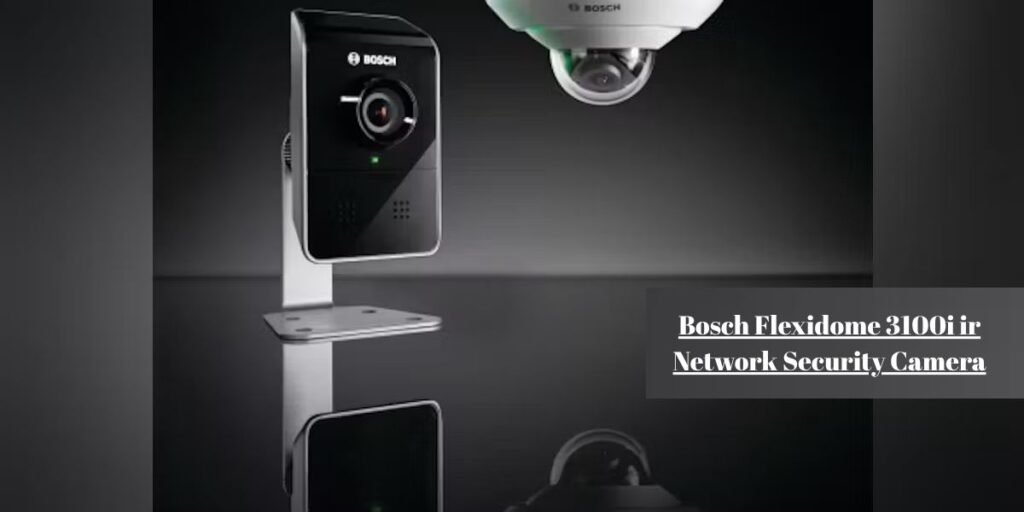
The Bosch FLEXIDOME 3100i IR is a family of fixed-dome network cameras rather than a single standalone hardware unit. When deploying security infrastructure across commercial real estate or industrial properties, system designers deal with a structured lineup spanning indoor and outdoor environments, as well as 2MP and 5MP resolutions. Outdoor variants feature heavy-duty IP66 weather protection and IK10 impact resistance to endure severe weather and physical vandalism.
This guide provides deep technical insight into camera models, hardware specifications, physical installation workflows, optical adjustments, network configuration, cybersecurity hardening, advanced IVA Pro Buildings video analytics, local storage options, and model selection criteria. Selecting the correct security camera requires matching environmental demands, focal lengths, illumination constraints, and backend network topologies to the exact hardware version pulled out of the shipping box.
What is the Bosch FLEXIDOME 3100i IR?
The FLEXIDOME product family represents Bosch Security and Safety Systems’ core line of fixed-dome network cameras engineered for professional commercial applications. The 3100i series balances enterprise-grade optical performance and edge-based analytics within a cost-effective form factor suited for retail spaces, corporate offices, warehouses, and perimeter gateways.
Every unit utilizes a fixed-dome design where the precision optical assembly sits safely beneath a durable polycarbonate dome bubble. As a network IP camera, video streams are digitized directly at the edge, sending compressed data packets across standard Ethernet architecture to Network Video Recorders or Video Management Systems.
Bosch configures these units into dedicated indoor and outdoor housings, pairing them with integrated infrared illumination across all standard variants. By offering both 2MP and 5MP options, the series lets security engineers scale pixel density based on whether a camera monitors a wide interior corridor or a critical exterior gate requiring tight digital zoom.
Which FLEXIDOME 3100i IR model do you need?
Navigating the product portfolio requires understanding Bosch’s core alphanumeric part numbers. The lineup centers around four primary base variants alongside specialized I/O versions:
- NDI-3702-AL: Indoor 2MP fixed-dome camera featuring built-in infrared and a motorized varifocal lens.
- NDI-3703-AL: Indoor 5MP fixed-dome camera delivering higher pixel density for large interior rooms.
- NDE-3702-AL: Outdoor 2MP fixed-dome camera equipped with ruggedized IP66 and IK10 enclosures.
- NDE-3703-AL: Outdoor 5MP fixed-dome camera built for harsh exterior environments.
Bosch designates indoor housings with the NDI prefix and outdoor variants with the NDE prefix. Recognizing this distinction prevents deployment errors where indoor hardware is mistakenly mounted to exterior walls without proper weather protection.
Quick Model Reference
| Model | Resolution | Installation | IR Support | Main Distinction |
| NDI-3702-AL | 2MP | Indoor | Yes | Indoor 2MP baseline surveillance |
| NDI-3703-AL | 5MP | Indoor | Yes | Indoor 5MP high pixel density |
| NDE-3702-AL | 2MP | Outdoor | Yes | IP66 and IK10 ruggedized 2MP |
| NDE-3703-AL | 5MP | Outdoor | Yes | IP66 and IK10 ruggedized 5MP |
What does I/O mean on the newer models?
Reviewing recent Bosch documentation reveals specific hardware variants appending an I/O designation to the model number. This abbreviation stands for Input/Output, denoting physical hardware connection blocks rather than indoor or outdoor capabilities.
These specialized models include hardware terminals that expand the operational scope of the camera edge. Installers use these terminal blocks to wire external security sensors directly into the camera housing.
Common applications for these input and output connections include:
- Wiring external passive infrared motion sensors to trigger high-priority alarm events.
- Connecting magnetic door contacts to log forced-entry attempts.
- Integrating external strobe lights or sirens activated by onboard analytics rules.
- Attaching external microphones or powered speakers for direct two-way audio talkdown.
Utilizing an I/O model eliminates the need to run separate low-voltage control lines back to a distant security panel, streamlining system architecture at critical access control points.
Bosch FLEXIDOME 3100i IR specifications
Evaluating professional surveillance hardware requires examining core technical metrics rather than marketing brochures. The hardware foundation of the 3100i series relies on precision optical sensors and electronic processors designed for continuous 24/7 operation.
The core technical metrics across the standard models include:
- Resolution options: 1920 x 1080 for 2MP and 3072 x 1728 for 5MP variants.
- Sensor type: High-sensitivity CMOS sensor architecture.
- Lens configuration: Motorized 3.3 to 10.2 mm varifocal lens with automated zoom and focus.
- Field of view: Horizontal viewing angles spanning roughly 34 to 106 degrees depending on focal adjustment.
- High Dynamic Range: 120 dB built-in HDR to handle difficult lighting and high-contrast scenes.
- Infrared performance: Integrated intelligent infrared illumination rated up to 30 meters of night vision range.
- Video compression: Advanced H.265, H.264, and MJPEG multi-streaming encoders.
- Analytics engine: Embedded IVA Pro Buildings powered by deep learning algorithms.
- Storage support: Onboard microSD card slot supporting capacities up to 2TB.
- Power delivery: Power over Ethernet IEEE 802.3af alongside redundant 12VDC power inputs.
- Environmental ratings: IP66 weather sealing and IK10 vandal resistance on NDE outdoor models.
- Operating temperature: Ranges from -20°C to 50°C depending on enclosure type.
- Physical dimensions: Compact dome footprint averaging roughly 138 mm diameter by 104 mm height.
- Weight: Approximately 0.8 kg per unit.
Interpreting these numbers helps clarify how the hardware performs under real surveillance workloads. The 3.3 to 10.2 mm motorized lens provides immense mounting flexibility, letting installers adjust field coverage remotely. The 120 dB HDR rating ensures that footage looking out a glass storefront into bright daylight preserves details in both the dark interior and the sunlit sidewalk.
How does the 3100i IR camera perform in different lighting conditions?
Daytime imaging relies on the high-sensitivity CMOS sensor capturing crisp color data under natural sunlight or interior artificial lighting. When ambient light drops, the mechanical True Day/Night IR cut filter retracts from the sensor path, shifting the camera into a monochrome sensitivity mode optimized for infrared reception.
Managing high-contrast scenes is handled by the internal 120 dB High Dynamic Range processor. This system captures multiple exposures sequentially and blends them into a balanced frame, preventing background windows from washing out foreground subjects or dark shadows from hiding intruders.
For total darkness, the onboard infrared illumination array provides invisible lighting up to 30 meters. The optical elements feature IR-corrected lenses to eliminate focus shift between day and night modes.
When evaluating the 30-meter IR specification, installers must separate illumination range from identification range. While the LEDs project light 30 meters into a dark yard, identifying an unknown human face at that maximum distance requires narrower lens framing and proper pixel density.
What does the 3.3–10.2 mm varifocal lens mean in practice?
Fixed-lens cameras force installers to compromise during initial mounting because the field of view is permanently locked at the factory. The FLEXIDOME 3100i IR avoids this limitation by incorporating a motorized varifocal lens spanning 3.3 to 10.2 mm.
At the wide 3.3 mm end, the camera delivers an expansive horizontal field of view exceeding 100 degrees, making it ideal for covering large open warehouse floors or wide retail store layouts. Adjusting the lens toward the 10.2 mm telephoto end narrows the frame significantly, pulling distant objects closer and increasing effective pixel density over a narrow corridor or cash register terminal.
Because the zoom and focus are motorized, adjustments are executed remotely through the web browser interface or VMS client. Installers do not need to manually twist focus rings inside the dome housing while balancing on a ladder, ensuring razor-sharp images can be dialed in safely from a ground-floor monitoring station.
Indoor vs outdoor models
Selecting the correct model variant requires evaluating the physical installation environment.
Indoor housings are engineered for climate-controlled commercial spaces such as office corridors, retail sales floors, and indoor lobbies. These models lack heavy-duty weather seals because they are protected from direct wind, rain, and extreme temperature shifts.
Outdoor models transition to ruggedized industrial designs built to withstand severe environmental stress. These variants incorporate IP66 ingress protection against windblown dust and driving rain alongside IK10 impact resistance to survive deliberate physical vandalism or accidental strikes.
Never select an outdoor camera simply because it shares matching resolution specifications with an indoor unit. The choice is driven entirely by environmental exposure. Deploying an indoor variant on an exterior loading dock or unheated breezeway invites moisture condensation, thermal drift, and premature hardware failure.
Installation
Physical deployment begins with determining the ideal mounting location to achieve optimal scene coverage and analytics calibration. Installers must evaluate the mounting surface composition, structural load capacity, required viewing angles, and physical clearance for future maintenance access.
Proper camera height and tilt angles directly dictate how effectively the onboard artificial intelligence classifies objects. Mounting a dome too high or at an overly steep downward angle distorts perspective, reducing the pixel density necessary for reliable tracking.
Mounting and positioning
Securing the camera baseplate to a solid wall, ceiling junction box, or pendant mount requires verifying that the physical orientation matches the designed field of view.
Installers must route low-voltage cabling safely through designated knockout channels to prevent pinching or weather exposure. The mounting architecture must hold the dome rigid to prevent vibrations from degrading digital video stability or triggering motion-based false alarms.
Connecting power and network
Powering the unit relies primarily on Power over Ethernet IEEE 802.3af, transmitting both operating electricity and high-speed data across a single copper Ethernet run.
Connecting the RJ45 termination to the internal port establishes network communication while eliminating the need for dedicated local AC power supplies. Outdoor deployments require careful weatherproof sealing of the cable gland to maintain the IP66 integrity against moisture migration.
Adjusting the lens and focus
Finalizing optical framing leverages the motorized zoom and focus controls accessible via the network management software.
Installers command the 3.3 to 10.2 mm varifocal assembly remotely, adjusting the focal length until the target surveillance zone fills the digital frame. The autofocus routine locks crystal-clear sharpness across the sensor plane, completing the physical alignment process without manual mechanical adjustments on a ladder.
Camera configuration
Initial network access is established by connecting the camera to a DHCP-enabled local area network or utilizing default static fallback addresses. Once logged into the web management interface, administrators configure foundational parameters including device hostname, time synchronization via NTP, and user access credentials.
Image settings require careful tuning to match the exact lighting dynamics of the monitored scene. Installers adjust electronic shutter speeds, backlight compensation levels, and 120 dB HDR parameters to eliminate blown-out highlights and deep shadows.
Configuring day and night switching thresholds ensures the mechanical IR cut filter transitions smoothly without unnecessary flickering during twilight hours. Privacy masks can be drawn directly over sensitive areas, such as neighboring residential windows or private office interiors, permanently blacking out those zones within the video stream.
Video streams
The camera encoder supports multi-streaming capabilities, allowing administrators to configure simultaneous video outputs tailored for different recording and viewing destinations.
Modern H.265 compression provides superior bandwidth reduction compared to legacy codecs, making it the preferred choice for primary high-resolution recording streams. H.264 maintains compatibility with older third-party video management systems, while MJPEG streams serve lightweight web browser previews and snapshot integrations.
Configuring individual streams involves setting precise resolution limits, target bitrates, and frame rates up to 30 frames per second. Balancing these encoding parameters prevents network congestion while ensuring evidentiary-grade clarity on critical security channels.
Network setup
Integrating the camera into an existing IT infrastructure requires assigning either a permanent static IP address or configuring a DHCP reservation on the corporate core router.
The physical Ethernet interface operates at 100/1000 Mbps, handling uncompressed or heavily compressed video packets alongside control telemetry. Network administrators must ensure that switch ports delivering Power over Ethernet provide adequate wattage headroom for the camera electronics and onboard infrared illuminators.
Advanced network services include IPv4 and IPv6 support, Quality of Service tagging for traffic prioritization, and multicast streaming to allow multiple VMS clients to pull identical video feeds without duplicating camera encoding resources.
Integrating the camera with a VMS or NVR
Connecting the FLEXIDOME 3100i IR to a central recording platform requires establishing secure communication protocols.
The camera supports ONVIF Profile S, Profile G, and Profile T, ensuring smooth discovery and stream handshakes across a wide range of third-party network video recorders. For enterprise deployments, native integration with Bosch Video Management System unlocks advanced telemetry, metadata streaming, and deep analytics event triggers.
Administrators must verify exact firmware compatibility and camera license requirements within their VMS ecosystem before deploying large quantities of hardware across a facility.
Security features
Securing modern IP surveillance infrastructure requires robust hardware-backed defenses against unauthorized access and cyber threats.
The FLEXIDOME 3100i IR incorporates a dedicated Secure Element hardware chip that implements a Trusted Platform Module to safeguard cryptographic keys and certificates.
Network communication is protected via mandatory HTTPS encryption, TLS 1.3 support, and 802.1X network access authentication to prevent unauthorized devices from connecting to camera switch ports. Firmware updates are cryptographically signed to block malicious code injection, ensuring the operating system remains uncompromised throughout its operational lifecycle.
How secure is the FLEXIDOME 3100i IR?
While the camera provides enterprise-grade hardware security features, physical device protection is only one component of a resilient surveillance architecture.
A hardened camera connected to an unsegmented network or configured with default administrative passwords remains highly vulnerable to compromise. Proper enterprise deployment requires rigorous cybersecurity hardening practices:
- Enforcing strict, complex administrative passwords across every device.
- Placing security cameras on an isolated, dedicated VLAN separated from corporate guest Wi-Fi and standard office traffic.
- Disabling unused network services and legacy protocols within the web interface.
- Maintaining a proactive firmware update schedule to patch emerging vulnerabilities.
- Restricting VMS and NVR server access behind multi-factor authentication gates.
Video analytics
The integration of IVA Pro Buildings transforms the camera from a passive recording device into an active, intelligent perimeter sentinel.
Powered by onboard deep-learning neural networks, the analytics engine distinguishes between genuine security threats and environmental false triggers such as blowing foliage, heavy rain, or wandering animals.
Core analytical capabilities configured within the device include:
- Intrusion detection: Alerting security operators when an unauthorized individual crosses a defined virtual perimeter boundary.
- Loitering detection: Flagging persons lingering in sensitive zones longer than a pre-configured time threshold.
- Line crossing: Counting individuals or vehicles passing through specific directional vectors.
- Object classification: Accurately separating human silhouettes and vehicular traffic from background motion.
- Forensic search metadata: Embedding rich search attributes directly into the video stream to accelerate post-event investigations.
Analytics reliability depends heavily on proper physical installation. If a camera is mounted too low or suffers from extreme lens vibration, tracking accuracy drops, highlighting the critical link between mechanical mounting and artificial intelligence performance.
Recording and storage
Edge recording provides a vital redundancy layer by utilizing integrated microSD card slots housed directly within the camera chassis, supporting storage capacities up to 2TB.
Administrators can configure continuous 24/7 recording or event-only recording triggered by analytical rules, ensuring video footage is preserved even if the upstream network connection or central NVR experiences an outage.
For centralized operations, high-definition streams route directly to network video recorders or enterprise VMS storage arrays utilizing H.265 bitrates to optimize long-term storage retention. Calculating total storage capacity requires balancing retention day targets against active recording frame rates, target bitrates, and the total number of deployed camera channels.
Which Bosch FLEXIDOME 3100i IR should you choose?
Selecting the optimal hardware configuration requires following a strict decision hierarchy based on environmental and operational needs:
| Requirement | Best Fit Model |
| Indoor 2MP surveillance | NDI-3702-AL |
| Indoor 5MP surveillance | NDI-3703-AL |
| Outdoor 2MP surveillance | NDE-3702-AL |
| Outdoor 5MP surveillance | NDE-3703-AL |
| Additional I/O requirements | Applicable -IO model variant |
Always evaluate environmental exposure first, followed by required pixel resolution, focal length requirements, and backend networking specifications.
FLEXIDOME 3100i IR installation checklist
Executing a flawless deployment requires systematically verifying critical parameters before mounting hardware to walls or ceilings:
- Verify exact camera part numbers and SKU configurations against project engineering drawings.
- Confirm indoor or outdoor environmental ratings match the specific mounting location.
- Calculate the required field of view and select proper focal lengths within the 3.3 to 10.2 mm range.
- Ensure proper mounting height and minimal downward tilt angles for accurate analytics performance.
- Check ambient lighting conditions and verify infrared illumination requirements.
- Confirm Power over Ethernet switch port availability and power budget limits.
- Establish static IP addressing plans or DHCP reservation protocols.
- Validate VMS and NVR software compatibility with current camera firmware versions.
- Determine edge storage capacity needs and install compatible microSD cards.
- Review cybersecurity hardening protocols and administrative credential policies.
Bosch FLEXIDOME 3100i IR model comparison
Professional system planning relies on direct evaluation of core hardware variations. The matrix below contrasts the four primary configurations across optics, physical protection, and resolution boundaries:
| Specification | Indoor 2MP (NDI-3702-AL) | Indoor 5MP (NDI-3703-AL) | Outdoor 2MP (NDE-3702-AL) | Outdoor 5MP (NDE-3703-AL) |
| Resolution | 2MP (1920 x 1080) | 5MP (3072 x 1728) | 2MP (1920 x 1080) | 5MP (3072 x 1728) |
| Form factor | Fixed dome | Fixed dome | Fixed dome | Fixed dome |
| IR range | Up to 30 meters | Up to 30 meters | Up to 30 meters | Up to 30 meters |
| Lens | 3.3–10.2 mm motorized | 3.3–10.2 mm motorized | 3.3–10.2 mm motorized | 3.3–10.2 mm motorized |
| HDR | 120 dB | 120 dB | 120 dB | 120 dB |
| PoE support | IEEE 802.3af | IEEE 802.3af | IEEE 802.3af | IEEE 802.3af |
| IP66 rating | — | — | Yes | Yes |
| IK10 rating | — | — | Yes | Yes |
Shared baseline attributes across all four variants include embedded IVA Pro Buildings deep learning analytics, a Secure Element hardware Trusted Platform Module, and an onboard microSD card slot supporting up to 2TB. Always verify exact manufacturer datasheets and SKU codes before ordering.
FAQs
Is the Bosch FLEXIDOME 3100i IR an indoor or outdoor camera?
The family includes dedicated variants for both environments, utilizing indoor housings for climate-controlled spaces and ruggedized outdoor enclosures for exterior perimeters.
What is the difference between the NDI and NDE models?
The NDI prefix designates indoor camera models, while the NDE prefix identifies outdoor models equipped with weather-sealed and vandal-resistant housings.
What is the difference between the 2MP and 5MP FLEXIDOME 3100i?
The primary difference is image sensor pixel density, with 5MP models providing higher resolution and finer digital zoom capabilities compared to standard 2MP variants.
How far does the FLEXIDOME 3100i IR illuminate at night?
The integrated intelligent infrared array provides effective night vision illumination up to 30 meters in complete darkness.
Does the FLEXIDOME 3100i IR support PoE?
Yes, all standard models feature Power over Ethernet IEEE 802.3af compliance for simultaneous power delivery and data transmission over a single cable.
Is the outdoor FLEXIDOME 3100i IR weatherproof?
Yes, outdoor models feature IP66 ingress protection against dust and driving rain alongside IK10 impact resistance for physical durability.
Does the FLEXIDOME 3100i support ONVIF?
Yes, the cameras support ONVIF Profile S, Profile G, and Profile T for seamless integration with compatible third-party video management systems.
What does I/O mean on the newer FLEXIDOME 3100i models?
The I/O designation indicates physical Input/Output connection blocks used to wire external security devices such as door contacts, motion sensors, and audio speakers directly into the camera.