
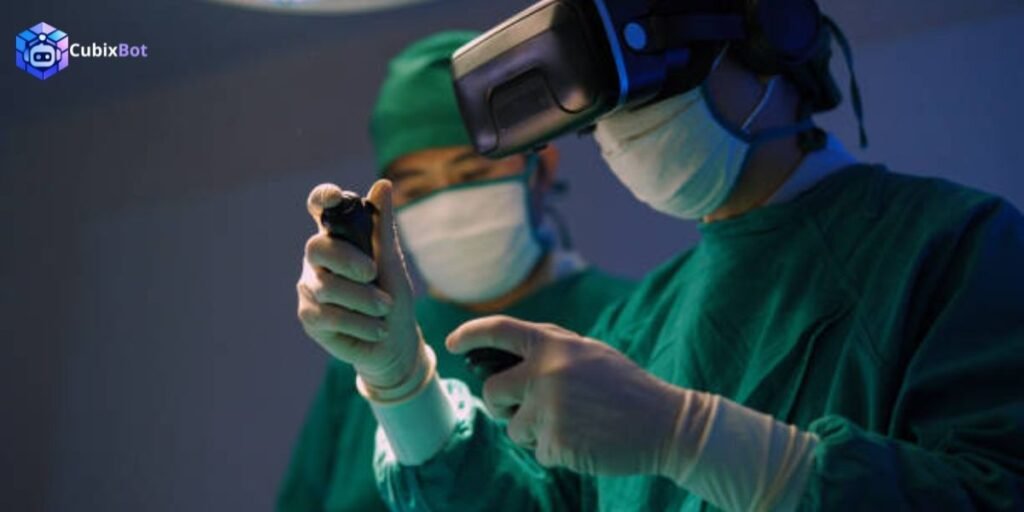
Operating rooms across the globe are undergoing a profound structural shift. Computer-assisted surgical platforms have transitioned from experimental novelty into the primary standard of care for complex interventions. Millions of procedures, ranging from delicate prostatectomies to complex orthopedic reconstructions, are now executed through a sophisticated partnership between human judgment and mechanical precision.
The name often misleads the public. These platforms do not replace the medical professional, nor do they make autonomous clinical choices. Every micro-movement, incision, and suture relies entirely on the direct input of a trained specialist. The underlying technology acts as an elite amplifier of the surgeon’s physical capabilities, allowing delicate operations to occur through punctures smaller than a postage stamp.
As health systems inject billions of dollars into digital infrastructure, the integration of real-time imaging, artificial intelligence, and physical robotics is setting a new benchmark for therapeutic safety. Understanding this domain requires moving past science-fiction tropes to look at the hard clinical data, engineering realities, and economic factors shifting the boundaries of modern healthcare.
What Is Surgical Robotics Technology?
At its core, surgical robotics technology is an integrated framework of digital, mechanical, and imaging subsystems designed to enhance minimally invasive healthcare. Instead of a standalone machine, think of it as a highly responsive ecosystem. It unifies high-definition visualization, spatial tracking, sub-millimeter instruments, and localized software loops into a single platform that operates in real time with zero perceived latency.
A functional operating setup relies on several highly specialized elements that communicate thousands of times per second. The system functions smoothly by splitting tasks across distinct physical hardware points.
The core infrastructure of a standard soft-tissue platform consists of the following components.
- An ergonomic master console where the primary surgeon sits outside the sterile field to manipulate hand controllers.
- A multi-arm patient-side cart that physically hovers over the operating table to manage instruments and endoscopic cameras.
- High-definition optical towers that project stereoscopic three-dimensional views with deep depth perception directly to the user’s viewport.
Advanced proprietary software matrices that translate macroscopic hand movements into microscopic mechanical responses inside the patient. - Localized sensory arrays that actively monitor resistance, instrument position, and system stability throughout the entire procedure.
Unlike heavy industrial manufacturing arms that follow rigid, pre-programmed paths, a medical robot is completely dependent on human input. The machine cannot move an inch without explicit human guidance. What it does provide, however, is mechanical optimization. By converting large hand gestures into miniaturized movements, the software successfully eliminates the natural, involuntary micro-tremors inherent to human hands, adding unprecedented stability during deep tissue dissections.
This structural synergy creates a clear separation from old-school open procedures or standard laparoscopy. It gives professionals an unprecedented level of dexterity inside tight anatomical spaces without requiring massive, highly traumatic physical openings.
How Surgical Robotics Reached the Modern Operating Room
The global commercial landscape highlights the rapid expansion of these platforms. Comprehensive market analysis indicates that the global surgical robotics market reached a valuation between $12.49 billion and $15.85 billion in 2025. Moving through the current stretch, industry tracking models show the market scaling to an estimated $14.45 billion to $18.36 billion. This financial momentum is driven by hospitals trying to reduce complications, minimize recovery room bottlenecks, and improve procedural consistency.
The historical foundation of this multi-billion-dollar field leads back to the turn of the century. The regulatory approval of the da Vinci Surgical System by the United States Food and Drug Administration in the year 2000 completely disrupted traditional surgery. Developed by Intuitive Surgical, that platform established the foundational master-slave architecture that defined the first quarter-century of robotic intervention.
The contemporary landscape is no longer a monopoly. Tech giants and traditional medical equipment manufacturers are fighting for operating room footprints with custom hardware.
The current competitive ecosystem includes several prominent tech developers.
- Intuitive Surgical: Actively scaling its flagship da Vinci 5 system, which offers over 150 design upgrades and an enormous leap in real-time processing power.
Medtronic: Driving global deployment of its Hugo platform, which leverages a modular design to let clinics move individual arms between operating rooms. - Stryker: Dominating the hard-tissue orthopedic landscape with its Mako platform, which specializes in bone-cutting accuracy for joint reconstructions.
Johnson & Johnson: Advancing its Ottava ecosystem to integrate surgical instrumentation directly into the operating table structure.
This surge of engineering competition is fundamentally changing hospital economics. As alternative platforms achieve regulatory clearances, hospitals gain leverage, which helps lower the historic capital barriers that once kept robotic surgery restricted to elite academic institutions.
What Happens During a Robotic Surgical Procedure?
The day-of-surgery workflow looks nothing like the automated scenarios depicted in pop culture. The human care team remains the absolute authority from the initial pre-op preparation to the final closing suture. The technology merely changes the mechanics of how the physical work is delivered.
The clinical process follows a rigid, highly choreographed sequence of events.
- The patient is anesthetized and positioned by the bedside nursing team while the robotic arms are brought into position.
- Surgeons create tiny port incisions, usually ranging from five to eight millimeters in width, across the targeted region.
- Specialized guide tubes called trocars are secured within these openings to allow the robotic instruments and camera to slide inside without friction.
- The primary operator steps away from the patient table to sit at the sterile master console, looking directly into the 3D optical viewer.
- Bedside assistants remain immediately next to the patient to manually exchange tools on the robotic arms as the operation shifts from dissection to suturing.
Inside the patient, the visual field is magnified up to ten times, providing clarity that surpasses the naked eye. When the surgeon moves the console master grips, the internal instruments mimic those exact vectors instantly. If the surgeon takes their eyes off the console viewer for even a second, an infrared sensor triggers an immediate safety lock, freezing the robotic arms in place until the human operator returns.
The operation concludes when the surgeon steps back to the bedside to remove the instruments and manually close the tiny puncture sites. The robot is powered down, wiped down, and prepped for sterilization, having served purely as a highly advanced instrument of human intent.
Why Surgeons Are Adopting Robotic Systems
The steady migration of specialists toward robotic workflows is rooted in concrete clinical advantages that directly solve the physical limitations of traditional medical practice. Traditional laparoscopy often relies on rigid instruments that create an awkward chopstick effect, forcing operators to move their hands in opposite directions from their targets. Robotic control completely removes this mental and physical tax.
The core driver of adoption is the integration of high-definition visualization and advanced instrument flexibility. By utilizing micro-wrist instruments that offer multiple degrees of freedom, a specialist can navigate around major nerve paths and delicate vasculature with minimal physical displacement of surrounding structures.
The ergonomic benefit also changes how long-term medical careers look. Traditional open or laparoscopic cases require operators to stand in rigid, physically taxing postures for hours at a time, leading to chronic spinal strain and exhaustion. Sitting at a custom-engineered console significantly lowers the physical toll of complex cases, keeping the operator focused during long, multi-hour tumor removals.
The real validation of this technology shows up in peer-reviewed patient outcomes.
- A massive reduction in intraoperative blood loss minimizes the need for emergency blood transfusions.
- Slightly lower rates of accidental soft-tissue trauma due to the presence of software-driven tremor filtering.
- Significantly lower pain levels after surgery, allowing patients to stop using heavy narcotic analgesics much earlier.
- Accelerated healing times that shorten hospital stays from several days to outpatient or next-day discharges.
- Smaller external scars that reduce the risk of long-term incisional hernias or localized infections.
These practical metrics matter to hospital administrators just as much as they do to patients. By getting individuals out of hospital beds faster, facilities can optimize their daily patient throughput and lower the overall societal cost of post-surgical recovery.
The Technology That Makes Surgical Robots Work
The performance of a modern surgical robot requires an incredibly complex blend of materials science, high-speed computing, and advanced sensor mechanics. If any of these systems fail to sync perfectly, the entire platform becomes unusable.
Robotic Manipulation Systems
The physical arms use specialized cable-driven linkages and high-torque brushless motors to mimic human joints. Proprietary wrist tech, like Intuitive’s EndoWrist design, allows the tiny tips to rotate up to 720 degrees within a space no larger than a thimble, giving the user access to angles that no human hand could physically achieve.
Three-Dimensional Imaging
The optical system uses dual high-resolution endoscopes that capture separate image feeds for each eye. The console processing unit fuses these streams into a seamless, flicker-free 3D image with high contrast, enabling precise depth tracking when working around thin anatomical tissue walls.
Motion Scaling and Tremor Elimination
The interface software constantly processes the operator’s physical inputs through mathematical filters. If a surgeon moves their hand three centimeters at the console, the system can scale that down to a single one-millimeter adjustment inside the patient, while simultaneously running algorithms that identify and filter out natural human physiological tremors.
Artificial Intelligence and Computer Vision
The newest generation of platforms leverages machine learning models to analyze video data mid-procedure. A major milestone occurred in February 2026, when Medtronic secured U.S. FDA clearance for its Stealth AXiS surgical platform, introducing live, integrated navigation loops that help track anatomy dynamically during delicate spinal procedures.
Surgical Navigation Systems
By uploading preoperative CT scans and MRI data directly into the system, the robot can overlay digital boundaries onto the surgeon’s live view. This operates much like a heads-up display in an aircraft, warning the surgeon if an instrument tip approaches a hidden blood vessel or critical nerve root.
Where Surgical Robotics Is Being Used Today
Modern computer-assisted surgery spans multiple medical disciplines, proving that targeted precision provides immense value across almost every square inch of human anatomy.
Urology
Urologic procedures remain the anchor of the industry. Over 85% of radical prostatectomies in major medical markets are performed robotically, primarily because the deep, narrow pelvic cavity makes traditional open surgery incredibly difficult when trying to preserve delicate nerves responsible for urinary and sexual function.
Gynecology
The removal of complex fibroids and advanced hysterectomies regularly utilizes robotic assistance. The system’s unique dexterity allows for clean suturing around the uterine wall, protecting reproductive potential and lowering the risk of post-op pelvic adhesions.
General Surgery
Colorectal resections, bariatric weight-loss operations, and hernia repairs represent the fastest-growing volume segments. According to a narrative review published in MDPI Clinical Medicine, robotic approaches to rectal cancers show vastly improved total mesorectal excision quality and significantly lower conversion rates to open surgery compared to older laparoscopic methods.
Orthopedic Surgery
Hard-tissue systems rely heavily on real-time spatial planning. During total knee and hip replacements, which see over one million cases annually in the United States alone, robotic bone-cutting guides allow implants to be positioned with sub-millimeter alignment accuracy, which significantly reduces long-term implant wear and tear.
Neurosurgery and Oncology
In the brain and along the spine, robotic navigation guides biopsy needles and places stabilization hardware along precise trajectories, preventing catastrophic spinal cord injuries. When treating aggressive solid tumors, this ultra-fine control allows oncologists to clear malignant tissue up to the exact margins without sacrificing healthy surrounding organs.
Why Hospitals Continue Investing in Surgical Robotics
Hospital systems are investing heavily in these platforms because medical technology has entered an era where digital integration defines institutional quality. A hospital without a functional robotic program struggles to recruit top-tier residency graduates, who now expect advanced digital infrastructure as a baseline requirement for their practice.
The current acquisition market is defined by a shift toward specialized ecosystems.
To understand how the major manufacturers are positioning their technology, look at this breakdown of leading platforms.
| Manufacturer | System Name | Core Clinical Focus | Key Technological Standout |
| Intuitive Surgical | da Vinci 5 | Soft-tissue oncology, urology, and gynecology | Integrated Force Feedback sensation loops |
| Medtronic | Hugo RAS | Urology, gynecology, and general surgery | Modular, independent multi-cart architecture |
| Stryker | Mako | Orthopedic joint reconstruction | Haptic-guided automatic boundary bone cutting |
| Zimmer Biomet | ROSA | Neurosurgery, spine, total joint replacement | Deep integration with pre-op predictive modeling |
| CMR Surgical | Versius | General minimal access surgery | Ultra-portable, lightweight bedside footprint |
The latest deployment strategies emphasize long-term economic sustainability. In mid-2026, Intuitive Surgical introduced extended-use Force Feedback tools for its newest platform, expanding the life of expensive instruments from 6 to 15 uses. This change addresses a major historical criticism of robotic surgery by drastically lowering the ongoing per-case cost for hospital pharmacy and supply chain budgets.
The Next Generation of Surgical Robotics
The horizon of computer-assisted intervention is focused on software intelligence rather than purely mechanical upgrades. Engineers want to build platforms that don’t just mimic a surgeon’s hands, but actively assist their cognitive choices during high-stress situations.
The immediate developmental roadmap centers on several advanced applications.
- Digital twin modeling, which generates a patient-specific virtual replica of an organ before the first incision is ever made.
- Augmented reality overlays that project real-time vascular pathways directly onto the surface of opaque organs during active dissection.
- Automated suturing sub-routines, allowing the machine to perform routine, repetitive closure tasks under direct human monitoring.
- Advanced haptic feedback arrays that let surgeons feel the actual resistance of internal tissue through the console master grips.
- Tele-surgery frameworks that leverage secure, ultra-low-latency networks to allow a specialist in New York to operate on a patient in a rural field clinic thousands of miles away.
Autonomous surgery remains a distant regulatory and ethical challenge. The medical community is not looking to replace human empathy, diagnostic nuance, and real-time crisis management. The future belongs entirely to cognitive augmentation, turning the operating room into an intelligent workspace where software protects against human error.
Why Surgical Robotics Is Not Yet Available Everywhere
Despite clear clinical benefits, wide-scale global deployment faces serious systemic hurdles. The most immediate roadblock is the steep financial entry point. Buying a standard soft-tissue robotic setup requires an initial capital layout between $1.5 million and $2.5 million, supplemented by mandatory service contracts and specialized single-use instruments that add thousands of dollars to every single operational run.
The training pipeline is another bottleneck. A professional cannot simply walk up to a robot and start operating. They must complete rigorous simulation hours, master custom device mechanics, and undergo extensive proctored human evaluations before a credentialing board grants independent privileges.
Hospital systems also face complex digital security landscapes. As platforms connect to institutional networks for data tracking and remote diagnostics, they become potential targets for cyber threats. This vulnerability was highlighted by a corporate phishing attempt managed by Intuitive Surgical in early 2026, reminding the industry that digital health requires absolute cybersecurity vigilance.
Finally, the legal and ethical framework surrounding automated software tools remains murky. If an AI-assisted navigation system misidentifies a tissue boundary during a difficult dissection, assigning liability between the attending specialist, the hospital IT group, and the hardware manufacturer introduces massive challenges for current healthcare law.
The Growing Impact of Surgical Robotics Across Modern Healthcare
The structural evolution of robotic-assisted healthcare represents one of the most successful tech integrations in modern medical history. What started as a niche engineering experiment has completely rewritten how humanity approaches physical healing. The traditional binary choice between highly traumatic open surgery and limited laparoscopic tools has been permanently replaced by a third option defined by digital precision.
The real triumph of this ecosystem is not the mechanical hardware itself, but the creation of an intelligent, data-driven environment that surrounds the operating team. Every procedure generates valuable telemetry that can be used to refine training models, optimize hospital resource scheduling, and push patient safety to historic levels.
As machine learning, advanced materials, and device competition mature through the back half of the decade, these systems will continue to shrink in footprint and expand in capability. For clinicians, hospital boards, and the global patient population, surgical robotics is no longer a luxury tier of modern medicine; it is the foundational architecture of future surgery.
Frequently Asked Questions
What is surgical robotics technology?
Surgical robotics technology is an advanced infrastructure of computer-controlled mechanical arms, high-definition visualization systems, and specialized software that assists medical professionals during minimally invasive procedures. The platform scales human movements with extreme accuracy while keeping the operator in complete control of the entire process.
How does surgical robotics technology work?
The operating specialist sits at a custom ergonomic console and manipulates sensitive hand controls while looking into a high-definition 3D viewfinder. The system translates those manual movements into immediate, synchronized micro-movements of tiny instruments inside the patient’s body while actively filtering out natural hand tremors.
Does a surgical robot perform surgery on its own?
No, the robot is completely incapable of independent action or autonomous clinical decision-making. Every single incision, suture, and instrument adjustment is directed by the human specialist sitting at the master console, meaning the machine functions strictly as an elite, high-precision extension of the surgeon’s hands.
What are the main benefits of surgical robotics technology?
Patients generally experience much smaller incisions, minimal blood loss during the procedure, reduced postoperative pain, and a lower risk of hospital-acquired infections. These clinical factors combine to deliver significantly shorter hospital stays and a faster overall return to regular employment and activity.
Which medical specialties use surgical robotics technology?
The technology is deployed heavily across urologic procedures, gynecologic surgeries, soft-tissue general surgery, thoracic operations, and targeted cancer resections. Additionally, specialized hard-tissue robotic setups are highly prevalent in orthopedic joint replacements and precision spinal fusions.
How is artificial intelligence used in surgical robotics?
Artificial intelligence is used to analyze real-time video feeds, map internal patient anatomy, track instrument usage patterns, and provide predictive navigation overlays during complex dissections. The software acts as an informational guide to enhance safety, but it does not replace human clinical judgment.
What is the future of surgical robotics technology?
The upcoming developmental landscape features advanced haptic feedback systems that simulate physical touch, deep integration with digital twin models, automated suturing assistance, and secure remote telesurgery links that allow specialists to operate across immense geographic distances.