
Preparing a technical presentation on 5G network slicing security requires balancing complex telecommunications architecture with precise cybersecurity frameworks. Students, network engineers, and telecom security professionals often struggle to turn dense technical specifications into a clear, actionable slide deck.
A high-impact presentation must cover more than basic 5G definitions. It needs to address the underlying virtualized architecture, granular threat vectors, regulatory isolation standards, and practical mitigation strategies.
This guide provides an authoritative breakdown of 5G network slicing security concepts, direct citations to specification standards, and a complete, ready-to-use 15-slide presentation blueprint designed for technical reviews, academic lectures, or enterprise security briefings.
What Is 5G Network Slicing Security?
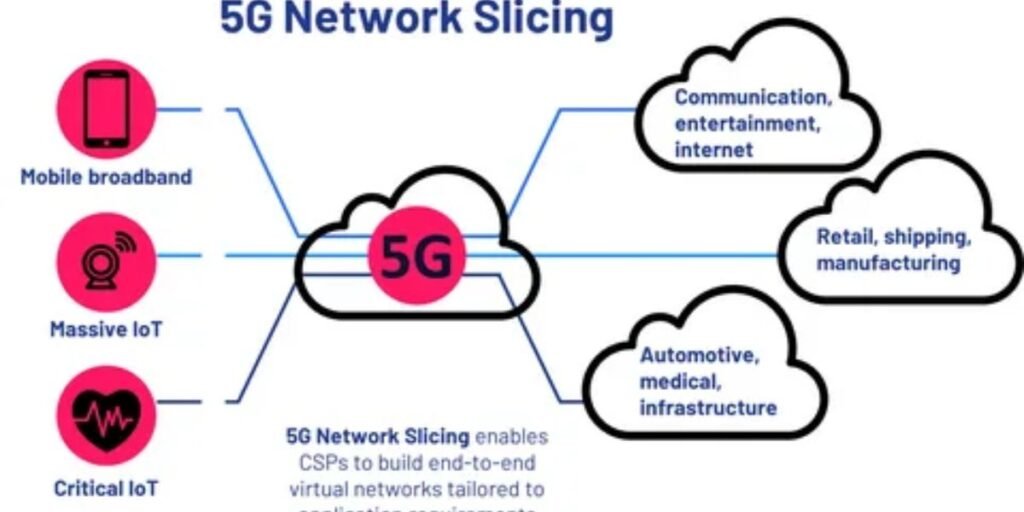
Network slicing is a core capability of 5G Standalone (SA) networks, enabled by 3GPP specifications. It lets network operators multiplex virtualized, logically independent networks over shared physical infrastructure. Each logical network, known as a network slice, is customized to satisfy specific Quality of Service (QoS) parameters, latency thresholds, throughput requirements, and operational profiles.
Security within this framework refers to the end-to-end enforcement of confidentiality, integrity, availability, and isolation across every slice lifecycle stage. While standard network slicing focuses on resource allocation and performance optimization, 5G network slicing security focuses on preventing unauthorized access, cross-slice data leakage, and side-channel exploitation.
The core challenge stems from resource sharing. In traditional 4G networks, physical separation or rigid tunneling provided boundary defenses. In 5G, multiple network slices share physical computing, storage, transport, and radio access resources.
Consider an operator hosting three distinct slices on shared infrastructure:
- Enterprise Slice: A private corporate network slice requiring strict encryption and zero-trust perimeter controls.
- Consumer Mobile Broadband Slice: An Enhanced Mobile Broadband (eMBB) slice requiring high bandwidth for streaming and general web browsing.
- Critical Infrastructure Slice: An Ultra-Reliable Low-Latency Communication (URLLC) slice governing smart grid distribution, where availability and real-time response are essential.
Without rigorous slice isolation, a security compromise in the high-bandwidth consumer slice could allow an adversary to launch a lateral attack or Denial-of-Service (DoS) campaign against the critical infrastructure slice sharing the same physical hardware host. Network slicing security ensures that the compromise of one logical slice does not degrade or expose adjacent slices.
How Network Slicing Works in a 5G Network
To present network slicing security effectively, presenters must first explain the underlying architectural components defined in technical standards like 3GPP TS 23.501 System Architecture Specifications and 3GPP TS 33.501 Security Architecture Specifications.
Network slices operate end-to-end across five distinct architectural domains:
- User Equipment (UE): The endpoint device containing a Subscriber Identity Module (SIM/eSIM) configured with Single Network Slice Selection Assistance Information (S-NSSAI) parameters to request access to specific slices.
- Radio Access Network (RAN): The gNodeB (gNB) infrastructure that applies spectrum management, physical resource block allocation, and logical channel prioritization to keep slice traffic separated over the air interface.
- Transport Network: The backhaul, midhaul, and fronthaul networks that use technologies like Segment Routing over IPv6 (SRv6), Virtual Private Networks (VPNs), and Virtual Local Area Networks (VLANs) to maintain logical separation across routers and switches.
- 5G Core (5GC): A Service-Based Architecture (SBA) comprising virtualized Network Functions (NFs), including the AMF (Access and Mobility Management Function), NSSF (Network Slice Selection Function), SMF (Session Management Function), and UPF (User Plane Function).
- Management and Orchestration (MANO): The framework responsible for provisioning, configuring, scaling, and decommissioning network slices across virtualized compute hosts using Network Functions Virtualization Orchestrators (NFVO).
In a functional 5G network, physical servers run a hypervisor or container runtime engine hosting Virtual Network Functions (VNFs) or Cloud-Native Network Functions (CNFs). The NSSF evaluates incoming UE requests, matches the S-NSSAI against authorized profiles, and assigns the user session to the designated core network functions bound to that specific slice.
Security Threats That Affect 5G Network Slices
Presenting slice-specific risks requires moving beyond standard malware or phishing topics to examine architectural vulnerabilities unique to virtualized, multi-tenant telecom environments. Joint technical releases published through the CISA 5G Security and Resilience Hub highlight several critical threat vectors.
Weak Slice Isolation
If logical boundaries between slices fail, data, telemetry, or control traffic can leak between tenants. This occurs when hypervisors, container runtimes, or network interfaces fail to maintain strict memory separation or cryptographic boundary enforcement across workloads sharing physical hardware.
Unauthorized Slice Access and Spoofing
Improperly configured Authentication and Authorization mechanisms at the AMF or NSSF level can allow an attacker to spoof S-NSSAI parameters. An unauthorized endpoint could gain access to a restricted enterprise or industrial control slice, bypassing perimeter controls.
Cross-Slice Side-Channel Attacks
A compromised workload in an eMBB slice can execute microarchitectural side-channel exploits, such as Spectre or Meltdown derivatives, against the underlying CPU shared with a URLLC slice. This allows malicious actors to extract cryptographic keys or sensitive telemetry from adjacent virtual machines.
Distributed Denial of Service (DDoS) and Resource Exhaustion
If resource quotas are not strictly enforced by the MANO layer, an attacker flooding the control plane or user plane of one slice can exhaust CPU cycles, memory pools, or transport bandwidth on the host hypervisor. This starves neighboring slices of hardware resources, causing a multi-slice outage.
Management and Orchestration (MANO) Compromise
The MANO layer acts as the administrative control plane for the entire slicing ecosystem. If an adversary compromises MANO APIs or administrative interfaces, they can manipulate slice configurations, disable isolation policies, mirror sensitive traffic, or spin up unauthorized rogue network functions.
Container and Virtualization Infrastructure Vulnerabilities
Modern 5G cores heavily leverage Kubernetes and containerized environments. Misconfigured container capabilities, unpatched host kernels, or insecure API gateways expose the host operating system, creating escalation paths that endanger every hosted VNF or CNF.
Security Controls Used to Protect Network Slices
Mitigating slice-specific threats requires deploying layered, zero-trust controls across the entire infrastructure stack, aligned with recommendations from the GSMA Cybersecurity Knowledge Base.
Key security controls include:
- Cryptographic and Logical Isolation: Enforce hardware-assisted separation using Trusted Execution Environments (TEEs), dedicated CPU core pinning, virtual memory separation, and encrypted transport tunnels (IPsec or MACsec) across the transport domain.
- Secondary Authentication and Authorization: Implement secondary authentication mechanisms (EAP-AKA’ or EAP-TLS) where the enterprise slice owner directly authenticates the device before granting access to the slice, operating independently of primary operator network authentication.
- Zero-Trust Least-Privilege Management: Secure MANO and Service-Based Architecture (SBA) APIs using OAuth 2.0 frameworks, Mutual Transport Layer Security (mTLS), and strict Role-Based Access Control (RBAC) to restrict interface privileges.
- Hardened Virtualization Runtimes: Secure container runtimes using tools like AppArmor, SELinux, and rootless container engines, paired with continuous vulnerability scanning of VNF/CNF container images.
- Continuous Slice Telemetry and Anomaly Detection: Deploy AI-driven security monitoring tools that track control-plane traffic patterns, NSSF queries, and hardware resource consumption to identify cross-slice resource starvation or spoofing attempts in real time.
- Lifecycle Security Assurance: Conduct formal security testing, code audits, and configuration compliance checks during slice onboarding, operational modification, and final decommissioning.
5G Network Slicing Security PPTX: Complete Slide-by-Slide Presentation
To create an authoritative presentation, structure your slides logically to guide the audience from core architectural fundamentals to advanced threat vectors and operational controls.
Here is a slide-by-slide master blueprint covering content, speaker narration notes, visual recommendations, and authoritative source attributions.
Slide 1: Title Slide
Slide Title: 5G Network Slicing Security: Threats, Architecture, and Safeguards
Slide Content:
- Presenter Name and Title: [Your Name / Cybersecurity Lead]
- Organization / Institution: [Company / University Department]
- Date: [Presentation Date]
- Core Topic: Securing Multi-Tenant Virtualized Infrastructure in 5G Standalone Networks
Speaker Explanation: Welcome everyone. Today we are diving into one of the most critical aspects of 5G Standalone deployments: network slicing security. As mobile operators transition from rigid physical infrastructure to dynamic, software-defined virtual networks, maintaining complete logical isolation across shared physical resources becomes paramount. We will examine how slicing works, the primary threat vectors identified by regulatory bodies like CISA and the NSA, and the operational security controls needed to protect critical enterprise and industrial workloads.
Visual Suggestion: High-resolution 5G network graphic depicting interconnected logical slices over a digital cloud mesh.
Source: Internal / Event Presentation Header
Slide 2: Introduction to 5G Network Slicing
Slide Title: Fundamentals of 5G Network Slicing
Slide Content:
- Multiplexing virtualized, independent logical networks over shared physical hardware.
- Customized network characteristics tailored to specific Service Level Agreements (SLAs).
- Enabled by Software-Defined Networking (SDN) and Network Functions Virtualization (NFV).
- Supported by 3GPP Standalone (SA) architecture specifications (TS 23.501).
- Fundamental shift from 4G monolithic architectures to multi-tenant cloud infrastructure.
Speaker Explanation: Network slicing allows a single physical 5G network to be logically partitioned into multiple end-to-end virtual networks. Unlike 4G, which treated all mobile traffic under a single unified network model, 5G uses SDN and NFV to configure dedicated logical networks. Each slice is configured with specific parameters for latency, throughput, connection density, and security policies, allowing operators to serve diverse industry verticals on a single shared physical footprint.
Visual Suggestion: Conceptual diagram illustrating one physical network divided into three distinct virtual layers.
Source: 3GPP TS 23.501 System Architecture Specification.
Slide 3: How Network Slicing Works
Slide Title: End-to-End Logical Network Creation
Slide Content:
- Slices span across Radio Access Network (RAN), Transport Network, and 5G Core (5GC).
- Identified globally by Single Network Slice Selection Assistance Information (S-NSSAI).
- S-NSSAI consists of Slice/Service Type (SST) and optional Slice Differentiator (SD).
- Standardized SST categories: eMBB (SST 1), URLLC (SST 2), mMTC (SST 3), and V2X (SST 4).
- Dynamic creation, scaling, and termination managed by orchestration engines.
Speaker Explanation: To understand slice security, we must understand how a slice is identified and routed. Every slice is globally tagged with an S-NSSAI identifier. The 3GPP standard defines primary Slice/Service Types: eMBB for consumer mobile broadband, URLLC for ultra-low latency applications like industrial automation, mMTC for massive IoT deployments, and V2X for connected vehicles. The S-NSSAI guides the network in routing traffic to the exact virtualized core functions assigned to that specific slice.
Visual Suggestion: Block diagram showing an S-NSSAI data structure broken down into SST (8 bits) and SD (24 bits).
Source: 3GPP TS 23.501 and GSMA Official Document NG.116.
Slide 4: 5G Network Slicing Architecture
Slide Title: Architectural Domains and Key Network Functions
Slide Content:
- User Equipment (UE): Requests specific slice access during network attach procedures.
- gNodeB (RAN): Enforces spectrum slicing and radio bearer separation.
- Network Slice Selection Function (NSSF): Authorizes and selects target slice instances.
- Access and Mobility Management Function (AMF): Handles primary authentication and initial slice routing.
- Session Management Function (SMF) & User Plane Function (UPF): Dedicated per-slice data processing.
Speaker Explanation: Slicing touches every domain of the 5G architecture. At the edge, the RAN allocates radio resources to ensure one slice does not saturate over-the-air capacity. In the core, the AMF acts as the primary gatekeeper. When a device connects, the AMF queries the NSSF to verify if the subscriber is authorized for the requested S-NSSAI. Once validated, dedicated SMF and UPF instances are assigned to handle user plane session management and data forwarding independently.
Visual Suggestion: Architectural schematic showing the flow from UE through gNB, AMF, NSSF, to dedicated SMF/UPF blocks.
Source: 3GPP TS 23.502 Procedures for the 5G System.
Slide 5: Why Network Slice Security Matters
Slide Title: The Critical Need for Boundary Security
Slide Content:
- Multi-tenancy introduces shared hardware exposure across competitors and critical systems.
- Failure of isolation leads to cross-slice lateral movement and data eavesdropping.
- Resource Starvation: Uncontrolled traffic spikes in one slice can degrade adjacent slices.
- Regulatory compliance demands strict data segregation (HIPAA, GDPR, NIS2).
- Zero-trust principles must be applied across virtualized network boundaries.
Speaker Explanation: In traditional networks, physical separation provided a natural security boundary. In 5G, a commercial streaming service, a hospital’s remote surgery system, and a power grid control network might run on the same physical server rack. If an adversary compromises a weakly protected consumer slice, poor boundary controls could allow them to launch lateral attacks or cause resource exhaustion on adjacent critical slices. Slicing security is fundamentally about guaranteeing absolute logical isolation over shared hardware.
Visual Suggestion: Split graphic comparing physical hardware isolation versus virtual multi-tenant slice isolation.
Source: CISA / NSA Enduring Security Framework (ESF) Guidance on 5G Network Slicing.
Slide 6: Major Security Threats
Slide Title: Primary Threat Vectors in Sliced Environments
Slide Content:
- Slice Isolation Failures: Data leakage across virtual machine or container boundaries.
- Unauthorized Access & Impersonation: Spoofing S-NSSAI tokens to enter restricted slices.
- Management & Orchestration (MANO) Hijacking: Compromising administrative API gateways.
- Side-Channel Exploitation: Microarchitectural CPU attacks on shared hypervisors.
- Denial of Service (DoS): Exhausting shared compute, memory, or backhaul bandwidth.
Speaker Explanation: Threats to network slicing generally target the underlying virtualization layers or administrative interfaces. An attacker might exploit container vulnerabilities to break out of a tenant sandbox, or manipulate unauthenticated API calls to trick the NSSF into granting unauthorized slice access. Additionally, DoS attacks can target shared infrastructure components like host memory or transport links, effectively blinding neighboring slices without needing to penetrate their internal encryption.
Visual Suggestion: Threat tree diagram mapping attack pathways from entry point to shared infrastructure impact.
Source: NSA / CISA Potential Threats to 5G Network Slicing.
Slide 7: Slice Isolation and Cross-Slice Risks
Slide Title: Enforcing Strict Multi-Layer Isolation
Slide Content:
- Compute Isolation: Dedicated CPU core pinning, virtual RAM separation, and hypervisor hardening.
- Storage Isolation: Encrypted ephemeral storage volumes tied exclusively to specific VNF/CNF instances.
- Network Isolation: Cryptographic tunneling (IPsec, MACsec) and SRv6 path separation.
- Control Plane Isolation: Restricting inter-NF signaling via secure Service-Based Interfaces (SBI).
- Risk: Failure at any layer compromises end-to-end slice integrity.
Speaker Explanation: Isolation cannot exist at just one level; it must be enforced across compute, storage, transport, and control plane domains. Compute isolation requires hypervisor hardening and CPU core pinning to prevent cross-tenant cache snooping. Transport isolation relies on cryptographic tunnels like IPsec or MACsec to prevent traffic interception on shared backhaul links. If any single domain lacks boundary controls, cross-slice contamination becomes possible.
Visual Suggestion: Layered security stack diagram highlighting isolation mechanisms at Compute, Storage, Transport, and Control Plane levels.
Source: 3GPP TS 33.501 Security Architecture and Procedures for 5G System.
Slide 8: Authentication and Authorization
Slide Title: Controlling Slice Access and Identity
Slide Content:
- Primary Authentication: Executed by AUSF and UDM during initial network attach.
- Secondary Authentication: Optional EAP-based authentication tailored to specific enterprise slices.
- NSSF Authorization: Verifies subscriber entitlement to specific S-NSSAI instances.
- OAuth 2.0 Framework: Authorizes service requests between core Network Functions across SBIs.
- Prevents rogue UEs or unauthorized NFs from requesting access to sensitive slice resources.
Speaker Explanation: Access control in 5G slicing is a multi-stage process. First, primary authentication verifies the subscriber’s SIM credentials against the core network. However, high-security enterprise slices often require Secondary Authentication. Using EAP-TLS or EAP-AKA’, the enterprise’s private Identity Provider independently authenticates the device before access to the specific slice is granted. Within the core, Network Functions use OAuth 2.0 access tokens to ensure rogue core components cannot interact with unauthorized slices.
Visual Suggestion: Authentication call-flow sequence diagram illustrating primary network attach followed by secondary enterprise authentication.
Source: 3GPP TS 33.501 Clause 11 (Secondary Authentication).
Slide 9: Virtualization and Cloud Security
Slide Title: Securing VNFs, CNFs, and Container Runtimes
Slide Content:
- Container Hardening: Rootless runtimes, immutable file systems, and minimal base images.
- Orchestration Security: Applying strict Role-Based Access Control (RBAC) in Kubernetes clusters.
- Image Integrity: Cryptographic signing of VNF/CNF images using tools like Cosign or Notary.
- Microsegmentation: Enforcing zero-trust network policies between pod networks.
- Vulnerability Management: Continuous automated scanning of container registries and host kernels.
Speaker Explanation: Because modern 5G cores are built as cloud-native containerized applications, cloud security best practices are essential to network slice security. Kubernetes clusters hosting CNFs must enforce strict Role-Based Access Control and pod security standards. Container images must be cryptographically signed and scanned for vulnerabilities before deployment. Microsegmentation ensures that even if one containerized Network Function is compromised, network policies block lateral movement to adjacent pods.
Visual Suggestion: Kubernetes cluster diagram showing pod microsegmentation and container runtime security boundaries.
Source: NIST SP 800-190 Application Container Security Guide.
Slide 10: Security Monitoring and Threat Detection
Slide Title: Real-Time Telemetry and Anomaly Detection
Slide Content:
- Continuous logging of Service-Based Interface (SBI) signaling traffic.
- AI/ML Analytics: Detecting anomalous S-NSSAI request rates or unusual session spikes.
- Monitoring hypervisor and host hardware resource usage for DoS indicators.
- Integration with Security Information and Event Management (SIEM) and SOAR platforms.
- Automated dynamic isolation of compromised slice functions upon threat detection.
Speaker Explanation: Static defenses are insufficient for dynamic virtualized networks. Operators must deploy continuous monitoring across control plane interfaces and virtualized infrastructure. Machine learning models analyze signaling logs to detect anomalies, such as a sudden flood of invalid S-NSSAI access requests or unauthorized cross-slice API calls. When a threat is detected, automated SOAR playbooks can dynamically isolate compromised core functions or re-route slice traffic to clean fallback infrastructure.
Visual Suggestion: Operational dashboard mockup showing real-time slice traffic telemetry, anomaly alerts, and automated threat responses.
Source: GSMA FS.31 5G Security Guide.
Slide 11: Security Controls and Mitigation
Slide Title: Comprehensive Risk Reduction Framework
Slide Content:
- Zero Trust Architecture: Never trust, always verify every NF API call and slice access request.
- Hardware-Assisted Security: Leveraging Trusted Execution Environments (TEEs) and HSMs.
- Least Privilege Management: Restricting MANO administrative rights using granular RBAC.
- Secure Configuration Baselines: Applying CIS Benchmarks to underlying host OS and k8s nodes.
- Regular Penetration Testing: Simulating cross-slice attacks and container escape scenarios.
Speaker Explanation: Mitigating slice risks requires applying a zero-trust approach across all operational layers. Operators must leverage hardware-assisted security like Trusted Execution Environments to protect sensitive cryptographic operations. Administrative access to MANO orchestration systems must follow strict least-privilege principles. Finally, regular penetration testing, specifically simulating container escapes and cross-slice side-channel attacks, must be conducted to validate boundary effectiveness.
Visual Suggestion: Security framework matrix aligning threats against specific architectural control mechanisms.
Source: CISA / NSA 5G Network Slicing: Security Considerations for Design, Deployment, and Maintenance.
Slide 12: Security Across the Slice Lifecycle
Slide Title: Managing Risk from Onboarding to Decommissioning
Slide Content:
- Design Phase: Threat modeling, SLA definition, and isolation requirements mapping.
- Deployment Phase: Automated security posture checking, image verification, and policy enforcement.
- Operational Phase: Continuous telemetry monitoring, patch management, and threat hunting.
- Decommissioning Phase: Cryptographic data sanitization and secure release of allocated compute/storage resources.
- Prevents data persistence or residual configuration flaws after slice termination.
Speaker Explanation: Slice security is an ongoing lifecycle process, not a one-time configuration. During the design phase, security requirements and isolation boundaries are established based on tenant SLAs. During automated deployment, orchestrators verify image signatures and configuration compliance. During operations, real-time telemetry monitors performance and security. Finally, when a slice is decommissioned, orchestrators must cryptographically sanitize storage volumes and release compute resources to prevent residual data exposure to future tenants.
Visual Suggestion: Circular lifecycle diagram outlining the four stages: Design, Deployment, Operation, and Decommissioning.
Source: GSMA Official Document PRD FS.31.
Slide 13: Practical Example: Securing Two Network Slices
Slide Title: Comparative Analysis: Enterprise vs. URLLC Slice (Hypothetical Example)
Slide Content:
- Enterprise Slice (Financial Services):
- Focus: Data confidentiality and strict access control.
- Controls: Secondary EAP-TLS authentication, dedicated UPF, IPsec transport, zero-trust perimeter.
- URLLC Slice (Smart Grid Automation):
- Focus: Extreme availability and low latency.
- Controls: Dedicated CPU core pinning, prioritized RAN resource allocation, DDoS rate limiting, local edge UPF.
- Key Takeaway: Security profiles must be customized to match specific operational profiles.
Speaker Explanation: To highlight how security profiles differ in practice, consider this hypothetical scenario comparing a financial services slice with a smart grid control slice. The financial slice prioritizes confidentiality, using secondary EAP-TLS authentication and dedicated User Plane Functions to secure sensitive transaction data. Conversely, the smart grid URLLC slice prioritizes availability and low latency, utilizing dedicated CPU core pinning, aggressive DDoS rate limiting, and local edge computing to guarantee performance. Security controls must match the operational requirements of the workload.
Visual Suggestion: Side-by-side comparison table evaluating security controls across two distinct slice profiles.
Source: Illustrative Scenario based on 3GPP TS 33.501 use cases.
Slide 14: Key Findings and Recommendations
Slide Title: Strategic Takeaways for 5G Security Leaders
Slide Content:
- Slicing enables operational flexibility but increases the virtualized attack surface.
- Isolation must be enforced across Compute, Transport, Core, and Management domains.
- Implement Zero Trust Architecture across all Service-Based Interfaces (SBI).
- Mandate Secondary Authentication for high-security enterprise or critical infrastructure slices.
- Align deployment practices with official guidance from CISA, NSA, and GSMA.
Speaker Explanation: In conclusion, 5G network slicing offers immense commercial flexibility, but it introduces complex security challenges tied to multi-tenancy and virtualization. Securing this environment requires enforcing multi-layer isolation across compute, transport, and control domains, implementing Zero Trust architecture across core APIs, and applying secondary authentication for sensitive workloads. Security leaders should ground their deployment frameworks in established regulatory guidance from CISA, the NSA, and the GSMA.
Visual Suggestion: Bulleted summary dashboard featuring key takeaway icons.
Source: Summary Synthesis of CISA, NSA, and GSMA Technical Recommendations.
Slide 15: References and Technical Standards
Slide Title: Authoritative Standards and Regulatory Sources
Slide Content:
- 3GPP TS 23.501 / TS 33.501: System Architecture and Security Procedures for 5G.
- CISA / NSA (ESF): 5G Network Slicing: Security Considerations for Design, Deployment, and Maintenance.
- NSA Cybersecurity Technical Report: Potential Threats to 5G Network Slicing.
- GSMA Official Document FS.31: 5G Security Guide.
- NIST SP 800-207: Zero Trust Architecture.
Speaker Explanation: This presentation is grounded in established global technical standards and regulatory security frameworks. For deeper technical research, I recommend reviewing the 3GPP TS 33.501 specification for core protocol security, alongside the joint 5G network slicing guidance published by CISA and the NSA. Thank you for your time, and I am now open to answering any technical questions.
Visual Suggestion: Structured list of official document covers and regulatory agency logos.
Source: Formal Technical Standard Bibliography.
5G Network Slicing Security PPTX Examples and Authoritative Technical Resources
When building or updating a technical slide deck, reviewing authoritative technical reports, direct slide repositories, and specification archives saves significant research time.
Here are the primary technical resources, presentation links, and official documentation libraries to consult:
- Access the exact slide deck directly on SlideShare: Fundamentals of 5G Network Slicing to review technical course outlines, curriculum agendas, and use-case allocations covering eMBB, mMTC, and URLLC deployment models.
- Review the core technical specifications via 3GPP TS 23.501 System Architecture Specification and 3GPP TS 33.501 Security Architecture Specification. These primary standards detail key hierarchies, signaling protocols, and secondary authentication workflows essential for technical slide decks.
- Access official government risk frameworks through the CISA 5G Security and Resilience Resource Hub. This portal features publications produced jointly by CISA and the NSA addressing multi-tenant threat models, hypervisor escape risks, and slice isolation controls.
- Explore industry operator standards using the GSMA Cybersecurity Document Library. GSMA technical guides offer operational standards on Service-Based Architecture hardening, microsegmentation, and signaling security.
How to Turn Technical Material Into Effective Presentation Slides
Presenting dense telecommunications specifications requires translating complex standards into scannable, visually engaging slides.
To maximize the clarity and impact of your technical presentation, apply these key editorial practices:
- Single Technical Focus Per Slide: Limit each slide to one core architectural concept, threat vector, or control mechanism to prevent cognitive overload.
- Prioritize Diagrams Over Dense Paragraphs: Use architectural schematics, call-flow diagrams, or threat trees instead of long text blocks when explaining complex concepts like S-NSSAI routing or EAP authentication.
- Side-By-Side Threat and Control Mapping: Pair specific security risks directly with their corresponding engineering mitigations to demonstrate clear problem-solving logic.
- Explicit Abbreviation Definitions: Define complex technical acronyms (S-NSSAI, AMF, NSSF, VNF, CNF) upon their first appearance to ensure accessibility for broader technical audiences.
- Maintain Speaker Notes Separately: Keep slide text concise (bullet points of 6–10 words) while putting deeper technical explanations, background context, and standard citations in your speaker notes.
- Attribute Technical Standards Explicitly: Reference specific 3GPP standards (TS 33.501), NIST guidelines, or CISA/NSA publications on your slides to build immediate credibility with your audience.
Frequently Asked Questions
What is 5G network slicing security?
5G network slicing security encompasses the architectural mechanisms, cryptographic protocols, and administrative controls used to protect virtualized logical networks running over shared physical 5G infrastructure. It focuses on enforcing strict slice isolation, preventing unauthorized slice access, securing management interfaces, and protecting against cross-slice side-channel attacks.
What core topics should a 5G network slicing security PPTX cover?
An authoritative presentation should cover 5G slicing architectural fundamentals (RAN, Transport, Core), S-NSSAI identification parameters, slice isolation mechanisms, major threat vectors (resource exhaustion, side-channel attacks, MANO compromise), primary and secondary authentication workflows, container security, real-time threat monitoring, and lifecycle management controls.
Where can I find the specific “Fundamentals of 5G Network Slicing” slide deck?
You can access the full presentation on SlideShare: Fundamentals of 5G Network Slicing. It provides a comprehensive outline covering 5G use cases, lifecycle management, and operational security configurations.
Can I adapt a general 5G networking presentation for a cybersecurity topic?
Yes, but you must expand the content significantly. General decks focus primarily on bandwidth, latency, and business monetization. For a cybersecurity deck, you must integrate specialized topics such as 3GPP TS 33.501 protocols, secondary EAP authentication, microarchitectural side-channel risks, hypervisor isolation controls, and Zero Trust API frameworks.
What are the most critical threats to 5G network slices?
The most significant threats include weak slice isolation leading to cross-tenant data leakage, unauthorized access via S-NSSAI spoofing, resource exhaustion caused by unconstrained DoS traffic in an adjacent slice, management plane compromise through insecure MANO APIs, and container escape vulnerabilities in the cloud-native core.
Which regulatory sources provide the best technical data for a 5G security deck?
The most authoritative sources are 3GPP technical specifications (TS 23.501 and TS 33.501), joint security guidance published by CISA and the NSA (5G Network Slicing: Security Considerations for Design, Deployment, and Maintenance), the GSMA 5G Security Guide (FS.31), and NIST SP 800-207 for Zero Trust Architecture.