
When professionals ask what guidance identifies federal information security controls, they are usually searching for the specific technical standards that prevent unauthorized access to government data.
The landscape of U.S. federal cybersecurity is governed by strict mandates that leave no room for guesswork. While many look for a single PDF or document, the reality is a layered ecosystem of laws and publications.
The primary guidance that identifies these controls is NIST Special Publication 800-53.
In an operational environment, NIST 800-53 does not exist in a vacuum. It is the technical engine driven by the legal requirements of FISMA and the procedural steps of the Risk Management Framework (RMF).
Whether you are a federal employee, a defense contractor, or a cloud service provider, understanding how these pieces fit together is the difference between achieving an Authority to Operate (ATO) and failing a critical audit.
This guide moves past the surface level to explain how these controls are actually defined, selected, and enforced within the U.S. government.
What Are Federal Information Security Controls?
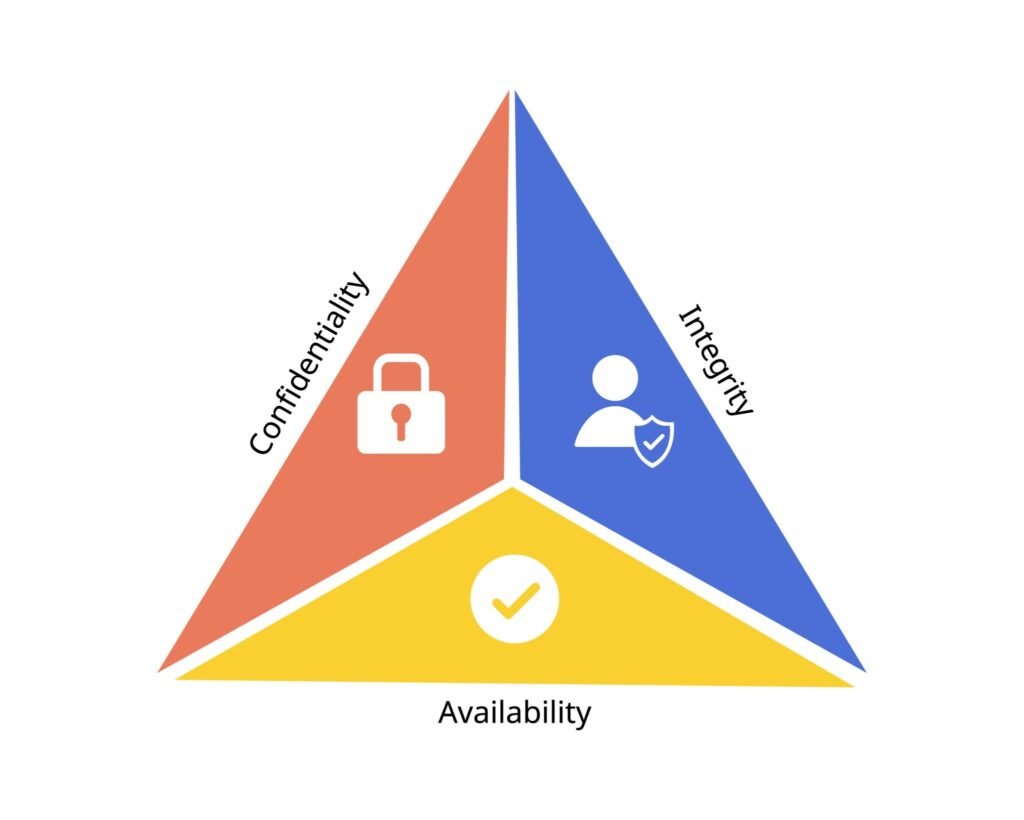
Federal information security controls are standardized safeguards used to protect the infrastructure that supports national security and public trust. These are mandatory requirements prescribed for federal information systems. Implementing these controls focuses on achieving three specific outcomes known as the CIA Triad.
| Security Objective | Meaning |
| Confidentiality | Protecting sensitive information from unauthorized disclosure or data breaches. |
| Integrity | Guarding against improper information modification or destruction to ensure data remains accurate. |
| Availability | Ensuring timely and reliable access to and use of information and systems. |
These controls apply to every system that touches federal data. This includes traditional on-premise agency servers, FedRAMP authorized cloud environments, and the systems of private contractors handling Controlled Unclassified Information (CUI).
If a control is missing or improperly configured, the risk is not just a digital vulnerability. It often results in legal penalties, the loss of government contracts, or a compromise of national security.
What Guidance Identifies Federal Information Security Controls?
Primary Authority: NIST SP 800-53
The definitive source for identifying these controls is NIST Special Publication 800-53 Security and Privacy Controls for Information Systems and Organizations. The current standard in use is Revision 5.
NIST 800-53 is a comprehensive catalog. It provides the menu of controls that an organization must choose from based on the sensitivity of their data. This publication is the standard because it provides a common language for security across all branches of the federal government.
The catalog includes several key components:
- Security Control Families: Groups of related security requirements like Access Control or Incident Response.
- Privacy Controls: Integrated requirements that ensure personally identifiable information is handled legally.
- Control Enhancements: Additional and more rigorous requirements added to a base control for high-risk systems.
- Implementation Guidance: Specific descriptions of what the control is intended to achieve.
Every major compliance program in the federal space includes FISMA, FedRAMP, and the CMMC for contractors. All of these rely on the NIST 800-53 catalog. In the world of federal cybersecurity, if a control is not in 800-53, it is generally not considered an official federal security control.
How Federal Security Controls Are Structured (Governance Model)
The selection of a security control is not a random process. It follows a top-down hierarchy that begins with federal law and ends with technical implementation. Understanding this flow is vital for any cybersecurity practitioner.
1. Legal Foundation: FISMA
The Federal Information Security Modernization Act (FISMA) is the law that started it all. Updated significantly in 2014, FISMA requires every federal agency to develop, document, and implement an agency-wide information security program.
FISMA provides the legal authority. It mandates that agencies use a risk-based approach to security and provides the Office of Management and Budget (OMB) and Department of Homeland Security (DHS) the authority to oversee agency compliance. It does not list the specific controls, but it legally requires that a standard be followed.
2. System Classification: FIPS 199
Before a single control is selected, the system must be categorized. This is done using Federal Information Processing Standard (FIPS) 199.
FIPS 199 requires an agency to look at their information and determine the worst-case scenario if that information was lost or hacked. The system is assigned a high-water mark based on the potential impact:
- Low Impact: The loss of confidentiality, integrity, or availability would have a limited adverse effect on operations or assets.
- Moderate Impact: The loss would have a serious adverse effect, such as significant financial loss or damage to agency assets.
- High Impact: The loss would have a severe or catastrophic effect, potentially involving loss of life or a threat to national security.
3. Minimum Security Requirements: FIPS 200
Once the impact level is known via FIPS 199, FIPS 200 sets the minimum security requirements. FIPS 200 is the minimum bar an agency must clear.
It identifies seventeen broad areas of security, such as Risk Assessment, System and Communications Protection, and Personnel Security. It mandates that agencies meet these requirements, but it points directly back to NIST SP 800-53 to find the specific technical details on how to fulfill them.
The Operational Workflow: RMF and ATO
4. Control Catalog: NIST SP 800-53
This stage is where the high-level legal mandates of FISMA and FIPS are translated into actual technical specifications. NIST SP 800-53 Revision 5 acts as the master inventory of every safeguard available to a federal system. Instead of being a flat list, it is organized into Control Families.
| ID | Control Family | Function and Purpose |
| AC | Access Control | Managing who can enter the system and limiting their activities. |
| AT | Awareness and Training | Ensuring personnel understand security risks and their roles. |
| AU | Audit and Accountability | Keeping detailed logs of system events for forensic analysis. |
| CA | Assessment and Authorization | Validating that controls are working and the system is authorized. |
| CM | Configuration Management | Controlling changes to the environment to prevent unauthorized drift. |
| CP | Contingency Planning | Preparing for disasters and ensuring business continuity. |
| IA | Identification and Authentication | Verifying user identities through MFA and secure credentials. |
| IR | Incident Response | Standardizing how breaches are detected, reported, and mitigated. |
| MA | Maintenance | Ensuring system upkeep is performed securely by authorized staff. |
| MP | Media Protection | Sanitizing and securing physical and digital storage media. |
| PE | Physical Protection | Limiting physical access to data centers and server rooms. |
| PL | Planning | Developing security plans and overarching risk strategies. |
| PS | Personnel Security | Screening employees and managing off-boarding procedures. |
| RA | Risk Assessment | Identifying vulnerabilities and threats on a recurring basis. |
| SA | System and Service Acquisition | Ensuring security is built into purchased software and services. |
| SC | System and Communications Protection | Securing the network and encrypting data in transit. |
| SI | System and Information Integrity | Protecting against malware and unauthorized system changes. |
| SR | Supply Chain Risk Management | Managing risks associated with third-party vendors and hardware. |
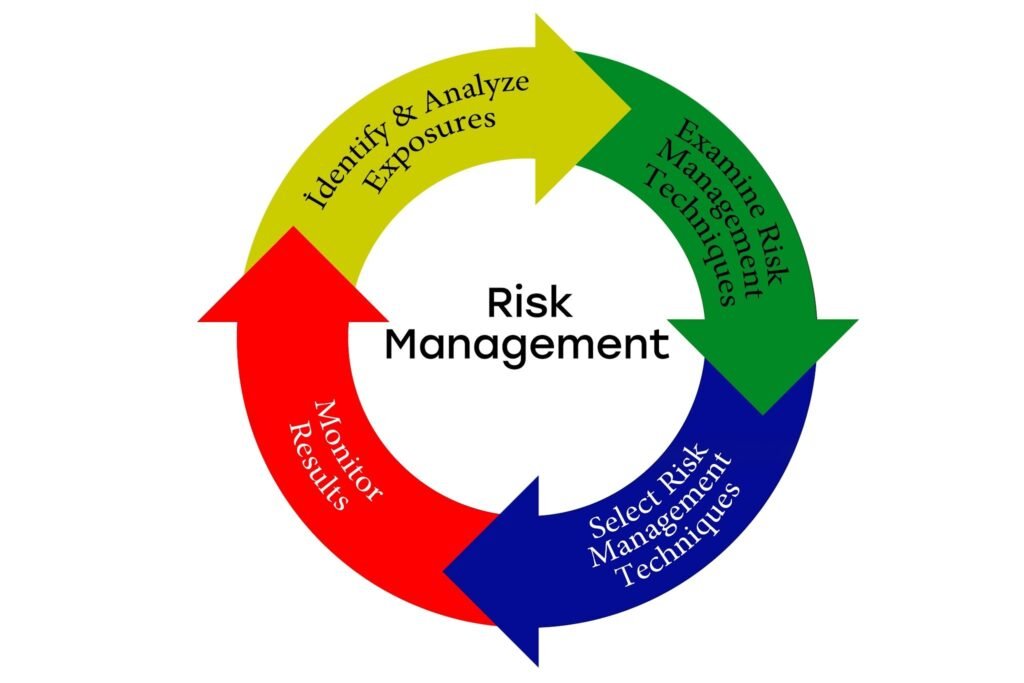
5. Implementation Lifecycle: NIST RMF (SP 800-37)
Having a catalog of controls is useless if you do not know which ones to pick or how to manage them over time. This is where NIST Special Publication 800-37, known as the Risk Management Framework (RMF), comes into play. RMF is the lifecycle process that takes a system from its initial design to its eventual retirement.
Shutterstock
The RMF process consists of seven specific steps:
- Prepare: Establishing organizational risk strategy and preparing for compliance.
- Categorize: Defining the system impact level using FIPS 199.
- Select: Picking specific controls from the 800-53 catalog based on the baseline.
- Implement: Deploying the technical and operational safeguards in the system.
- Assess: Having independent auditors verify that the controls work as intended.
- Authorize: Senior officials signing off on the risk and granting an ATO.
- Monitor: Continuously evaluating the security posture throughout the system life.
Federal Security Control Baselines
One of the most practical aspects of federal guidance is the use of Control Baselines. It would be inefficient to force a public-facing weather website to follow the same security rigor as a nuclear command and control system. Baselines provide a starting point for selection based on the FIPS 199 impact level.
These baselines are officially identified in NIST SP 800-53B. This supplemental guidance provides the pre-defined sets of controls for Low, Moderate, and High impact systems.
| Baseline | Typical Usage Scenario | Control Rigor |
| Low | Publicly available data with minimal risk to the mission. | Basic hygiene and standard encryption. |
| Moderate | Standard enterprise systems with sensitive data. | Hardened configs and frequent monitoring. |
| High | Critical systems where a breach could be catastrophic. | Continuous monitoring and advanced redundancy. |
The Moderate Baseline is the most common across the federal landscape. Most civilian agencies and large-scale cloud providers focus their efforts here, as it balances strong security with operational flexibility.
Authority to Operate (ATO)
In the world of federal cybersecurity, the Authority to Operate (ATO) is the ultimate goal. A system is not legally allowed to process federal data or connect to a federal network without a valid ATO. This is the formal acceptance of risk by an Authorizing Official (AO).
Getting an ATO is an evidence-based process. It requires a body of proof including:
- System Security Plan (SSP): The blueprint of how every single 800-53 control is implemented.
- Security Assessment Report (SAR): The findings from the audit performed by the assessment team.
- Plan of Action and Milestones (POA&M): The schedule for fixing security gaps.
- Security Assessment Plan (SAP): The roadmap used to guide the assessment process.
FedRAMP and Cloud Security Controls
The Federal Risk and Authorization Management Program (FedRAMP) is the standardized framework that applies NIST SP 800-53 controls specifically to cloud computing. Cloud service providers (CSPs) like AWS, Azure, and Google Cloud must prove their environment meets these standards before they can host federal workloads.
FedRAMP doesn’t invent new controls but adds cloud-specific requirements. This unified approach allows agencies to “do once, use many times.” Once a CSP earns a FedRAMP authorization, any agency can leverage that package to grant their own ATO, significantly speeding up cloud migration.
Contractor Security Requirements
Federal security expectations do not stop at the agency gates. Private companies that handle government data must also follow specific guidance.
NIST SP 800-171
Non-federal organizations handling Controlled Unclassified Information (CUI) typically follow NIST SP 800-171. This is a streamlined version of the 800-53 catalog, focusing strictly on data protection without the agency-specific administrative requirements. Compliance with 800-171 is often a mandatory clause in federal contracts.
CMMC (Defense Contractors)
The Cybersecurity Maturity Model Certification (CMMC) is the Department of Defense program designed to verify contractor compliance. Unlike previous self-attestation models, CMMC requires many contractors to pass third-party assessments. This ensures the defense supply chain is hardened against nation-state cyber espionage.
Continuous Monitoring, Identity, and Zero Trust
The federal government is currently undergoing a massive modernization transition.
Continuous Monitoring (ConMon): Cybersecurity is no longer a “one and done” audit. Agencies must constantly verify controls through automated vulnerability scanning, log analysis, and patch management.
Identity-Centric Security: As the network perimeter disappears, Identity becomes the primary control layer. This involves Multi-Factor Authentication (MFA) and Privileged Access Management (PAM) to ensure only the right people have the right access.
Zero Trust Architecture (ZTA): Driven by Executive Order 14028, federal systems are moving toward a model where no user or device is trusted by default. This involves Micro-segmentation and continuous authentication to stop attackers from moving laterally through a network.
Final Expert Answer
The primary guidance that identifies federal information security controls is NIST Special Publication 800-53. It is the master catalog for every technical and operational safeguard used to protect U.S. government digital assets.
To fully understand the federal ecosystem, a professional must understand the interaction:
- FISMA provides the legal mandate.
- FIPS 199/200 provide the classification and minimum requirements.
- NIST 800-53 provides the technical catalog.
- NIST RMF (800-37) provides the implementation lifecycle.
- FedRAMP/CMMC enforce these controls for the cloud and supply chain.
FAQs
1. What guidance identifies federal information security controls?
The official catalog is NIST SP 800-53. It identifies the full list of security and privacy controls required for federal systems.
2. Is FISMA the same as NIST 800-53?
No. FISMA is the law that mandates security, while NIST 800-53 is the technical guidebook that tells agencies which specific controls to implement.
3. What role does the Risk Management Framework (RMF) play?
The RMF (NIST 800-37) is the process used to manage security. It explains how to categorize a system, select the right controls, and monitor them over time.
4. Why are FIPS 199 and FIPS 200 important?
FIPS 199 is used to decide if a system is Low, Moderate, or High impact. FIPS 200 then sets the minimum security requirements that must be met.
5. What is an ATO in the federal government?
An Authority to Operate (ATO) is the formal sign-off from a senior official proving the system has been tested and the government accepts the remaining risks.
6. Do these controls apply to private contractors?
Yes. Contractors follow NIST 800-171 or specific NIST 800-53 requirements depending on the type of data they handle and their specific contract language.
7. What is the goal of Zero Trust?
Zero Trust eliminates the idea that anything inside a government network is safe. It requires continuous verification of every user and device to prevent lateral movement.