
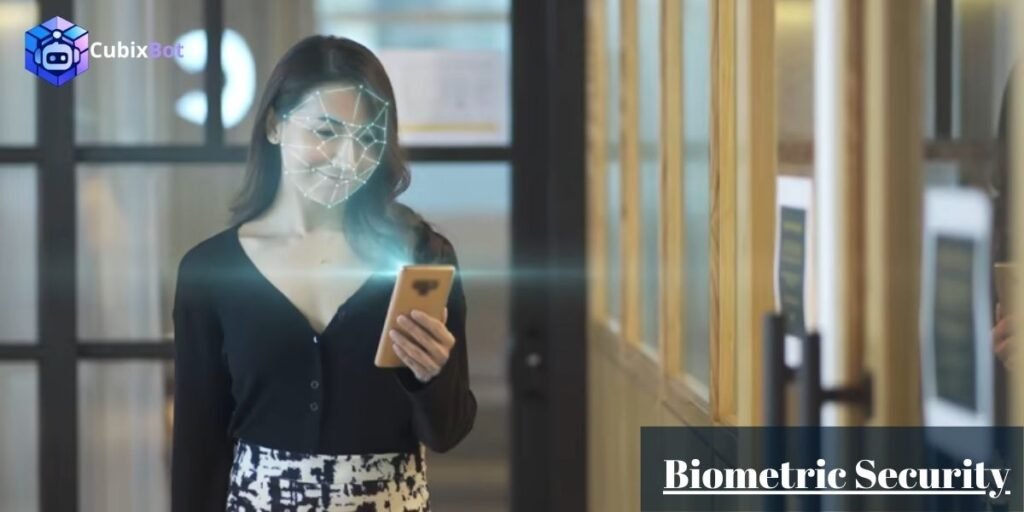
Biometric security uses fingerprints. It scans facial expressions to confirm identity. Biometrics rely on features you cannot lose or forget. It checks identity using personal biological traits. These traits are unique, though hard to copy.
Biometric security is no longer a concept limited to high-budget movies or secret research labs. In fact, most modern smartphone users engage with this technology multiple times every single day. Whether you use a thumbprint to unlock a screen or a facial scan to authorize a payment, you are using your own body as a digital key. This tech has replaced the need for complex passwords by focusing on your unique physical and behavioral traits.
Have you ever considered what happens behind that Access Granted message? When you provide a fingerprint or a face scan, where does that data actually go? Is it shared with other companies or kept strictly on your device? Understanding these mechanics is vital because, unlike a password, you cannot simply reset your face if it is ever compromised.
This guide breaks down how biometric security works by exploring how it captures biological data and uses it as a lock. We also look at security concerns and the future of this technology to help you navigate a world where your physical identity is your primary ID.
What Is Biometric Security
At its core, biometric security is an authentication method using unique biological or behavioral characteristics to verify who you are. Traditional security relies on something you know, like a password. Biometrics shifts the focus to something you are.
Because physical traits like retinal patterns or fingerprints are nearly impossible to replicate, this system perfectly provides higher individual accountability than a PIN. In the digital world, it acts as a bridge, ensuring the person accessing a system is physically who they claim to be.
How Biometric Security Works Step by Step
The transition from a physical touch to a digital approval involves several layers of processing. It is not as simple as taking a photograph because it involves complex mathematical translations.
Data Capture Enrollment Phase
The process begins with the Enrollment Phase. During this step, a sensor such as a camera or a fingerprint scanner captures a raw sample of your biometric trait. For example, when setting up a new phone, you press your finger multiple times to ensure the sensor captures the ridges and valleys from various angles to create a high-quality baseline.
Feature Extraction
Once the raw data is captured, the system does not store the actual image of your finger or face. Instead, it uses a Feature Extraction Algorithm. This algorithm identifies unique markers like the specific distance between your eyes or the way a fingerprint ridge ends. These markers are then converted into a digital string of code or a mathematical representation.
Template Storage
This digital code is saved as a Biometric Template. This is a crucial security step because if a hacker breaches the system, they find encrypted mathematical files rather than actual photos of faces. Depending on the device, this template is stored in a dedicated hardware chip, often called a Secure Enclave, or on a centralized server.
Matching and Verification
When you later try to access the system, the sensor captures your data again and repeats the extraction. The system then compares this new live digital string against the stored template. The goal is to find a high degree of mathematical similarity between the two.
Decision Engine
The final stage is managed by the Decision Engine. Because biological traits can change slightly, like a cut on a finger, the system rarely looks for a 100 percent identical match. Instead, it relies on a Threshold Score. If the similarity exceeds the predefined security limit, access is granted.
Types of Biometric Security Systems
Biometrics are categorized into physical characteristics and how you act.
Fingerprint Recognition
This remains the most common form of biometrics due to its balance of cost and accuracy. Modern scanners use either optical sensors, which take a high-resolution photo, or ultrasonic sensors, which use sound waves to map the 3D structure of the finger.
Facial Recognition
This technology maps the geometry of the face, including the distance between the forehead and chin. Higher-end versions use Infrared Projectors to map thousands of invisible dots, creating a 3D depth map that cannot be tricked by a photograph.
Iris and Retina Scanning
Iris scanning looks at the complex colored ring of the eye, which contains hundreds of unique data points that remain stable throughout life. Retina scanning maps the unique pattern of blood vessels at the back of the eye. These are typically reserved for high-security environments like data centers.
Voice Recognition
Also known as Speaker Recognition, this system analyzes the voiceprint, which is a combination of physical traits like throat shape and behavioral patterns like speaking rate. While convenient, it is more susceptible to deepfake audio than physical biometrics.
Behavioral Biometrics
This is a newer frontier that monitors how you interact with a device. It tracks your typing rhythm, the angle at which you hold your phone, and even your gait while walking. It allows for continuous authentication, meaning the device stays unlocked only as long as it recognizes your specific patterns.
Multimodal Biometrics
To minimize the risk of a mistake, many high-security systems use Multimodal Biometrics. This requires two or more factors, such as a fingerprint scan and a facial scan, before granting access. This layered approach significantly reduces the chances of a successful security breach.
Where Biometric Security Is Used Today
Biometric security has moved far beyond high-tech labs and is now a standard part of our daily infrastructure. You likely interact with these systems dozens of times a day without even realizing how much data is being processed in the background.
Smartphones and Personal Devices
The most common interaction with biometrics happens right in your pocket. Modern smartphones use FaceID or Fingerprint Sensors as the primary gatekeepers for your personal data. Beyond just unlocking your phone, these features authorize app downloads, manage password autofill, and even secure private photo vaults.
Banking and Financial Services
Banks have largely moved away from traditional PINs for mobile access. Most banking apps now require a biometric scan to view your balance or send money. This adds a layer of Know Your Customer (KYC) compliance, ensuring that the person holding the phone is the actual account owner. Some advanced ATMs even allow for cardless withdrawals using palm or iris recognition.
Airports and Border Control
International travel is becoming increasingly contactless. Many airports now use automated e-gates that scan your passport chip and then compare it to a live facial scan. This reduces human error and speeds up the immigration process by verifying your identity against global databases in seconds.
Law Enforcement and Surveillance
Police departments and security agencies use biometrics to identify suspects and maintain public safety. This often involves comparing CCTV footage against a database of known offenders. While it helps in solving crimes quickly, it also raises significant questions about constant public monitoring.
Workplace Access and Attendance Systems
Many offices have replaced plastic keycards with biometric scanners. Employees might scan a thumb or use a facial recognition terminal to enter the building. This prevents buddy punching, where one employee clocks in for another, and ensures that only authorized personnel can enter sensitive areas like server rooms.
Healthcare Systems
In hospitals, biometrics are used to prevent medical identity theft. By scanning a patient’s iris or fingerprint, staff can instantly pull up the correct electronic health record. This ensures the right treatment is given to the right person and prevents insurance fraud.
Government ID Programs
Governments use biometrics for large-scale registration, such as national ID cards, driver’s licenses, and voter registration. In many countries, your fingerprints are linked to your official identity to prevent the creation of fake personas and to ensure that social benefits reach the correct citizens.
Where Your Biometric Data Actually Goes
When you scan your face or finger, the information does not just vanish. It is processed and stored in specific locations depending on the device and the service you are using.
On Device Storage Secure Enclave and Trusted Hardware
On most modern smartphones, your actual biometric data never leaves the device. Instead, it is stored in an isolated part of the processor known as a Secure Enclave or a Trusted Execution Environment (TEE). The main operating system cannot even see your fingerprint; it only receives a simple yes or no from the secure chip when a match is found.
Cloud Storage and Centralized Databases
Some services, especially those related to social media or enterprise security, store biometric templates in the Cloud. This allows you to use your face to log in across multiple devices. However, this creates a central target for hackers because a single database breach could expose thousands of identity templates.
Third Party Access and APIs
When you use your face to log into a third-party app, the app developer usually does not get your biometric data. Instead, they use an API (Application Programming Interface) provided by the phone manufacturer. The phone does the matching and simply tells the app that the user is verified.
Government and Law Enforcement Databases
Biometric data collected for passports or criminal records is stored in massive government-run databases. These are highly secured but are often linked across different agencies. In some regions, these databases are used for real-time matching with street cameras.
Data Sharing Between Organizations
In some cases, different organizations might share biometric “hashes” to track fraud. For example, a group of banks might share data about a known fraudster’s voiceprint to prevent them from opening accounts at other institutions.
Who Uses Your Biometric Data And Why
Various entities collect your biological traits for reasons ranging from convenience to national security.
Tech Companies
Major tech firms use biometrics to build seamless user experiences. By removing the friction of passwords, they keep you locked into their ecosystem. They also use the tech to improve their AI algorithms by learning how to better recognize human faces and voices under different conditions.
Financial Institutions
For banks, the primary goal is fraud prevention and regulatory compliance. Biometrics are much harder to steal than a credit card number or a password. By using your body as a key, they significantly reduce their liability for unauthorized transactions.
Governments
Governments use this data for public administration and border security. It allows them to track citizens for voting, taxation, and law enforcement purposes while ensuring that national borders remain secure against identity fraud.
Employers and Private Organizations
Private companies use biometrics mainly for asset protection and workforce management. They want to ensure that only the right people are accessing their physical and digital property, and they use it to keep accurate logs of employee hours.
Benefits of Biometric Security
The primary advantage of biometrics is the shift from convenience to accountability. Traditional passwords are often written down, shared, or easily guessed through social engineering. Biometrics removes this human error by linking security to your unique physical presence.
- Speed and Efficiency: Unlocking a device or authorizing a payment takes less than a second. This friction-free experience is why biometrics has become the preferred method for mobile banking and airport security.
- Phishing Resistance: Unlike a password or an SMS code, your fingerprint or iris cannot be “tricked” out of you via a fake website or a phone call.
- No Forgetfulness: You cannot lose your face or forget your thumbprint. This eliminates the need for Password Reset flows, which are often the weakest point in an account’s security.
- Audit Trails: In workplace environments, biometrics provide an indisputable record of who accessed a specific area at what time. This prevents unauthorized access more effectively than a plastic badge that can be stolen or passed around.
Risks and Privacy Concerns You Should Know
While the technology is powerful, it introduces a unique set of vulnerabilities that do not exist with traditional keys or PINs.
Data Breaches: Biometric Data Is Permanent
This is the most significant risk. If a password is stolen in a database breach, you can simply change it. If your Biometric Template is stolen, you cannot change your fingerprints or your retina. This creates a permanent security risk that could affect you for the rest of your life.
Surveillance and Misuse
The ability to identify individuals in a crowd using facial recognition allows for mass surveillance. Governments or private companies could potentially track your movements across a city without your consent. This leads to concerns about the erosion of anonymity in public spaces.
False Positives and False Negatives
No biometric system is perfect. A False Positive occurs when the system incorrectly identifies an intruder as a legitimate user. A False Negative happens when the system denies access to the actual owner, perhaps due to poor lighting or a minor injury. Both scenarios compromise either security or usability.
Lack of User Control
Once your biometric data is in a centralized database, you often lose control over how it is used. It can be shared between different government agencies or even sold between private companies under the guise of improving services without your explicit knowledge.
Ethical Concerns and Bias
Many facial recognition algorithms have shown Algorithmic Bias. Studies show these systems often have higher error rates for women and people of color. This can lead to wrongful accusations in law enforcement or unfair denial of services in banking and housing.
Can Biometric Security Be Hacked
Yes, biometrics can be compromised. As the technology evolves, so do the methods used by attackers to bypass these systems.
Spoofing Attacks
This involves using a physical or digital replica to trick a sensor. Attackers have successfully used 3D printed masks to bypass facial recognition or high-resolution photos of fingerprints lifted from a glass surface to create silicone molds. Some sensors now use liveness detection to ensure they are scanning a real human being.
Database Breaches
Most hacks do not happen at the sensor but at the storage level. If a company stores biometric templates on a central server, a single breach can expose millions of users. While these templates are encrypted, attackers with enough computing power can sometimes reverse engineer them.
Replay Attacks
In a Replay Attack, a hacker intercepts the digital signal sent from a scanner to the processor. They then “replay” that authorized signal at a later time to gain access without needing the actual physical trait.
AI-Based Attacks
With the rise of Generative AI, deepfakes have become a major threat. AI can now create highly realistic voice clones or video overlays that can bypass basic voice and facial recognition systems. This forces security companies to constantly update their algorithms to detect synthetic media.
How Secure Is Biometric Data Compared to Passwords
The following comparison highlights the fundamental differences between these two security models.
| Feature | Passwords / PINs | Biometric Security |
| Source | Knowledge (Something you know) | Identity (Something you are) |
| Resettability | High (Can be changed instantly) | Non-existent (Permanent) |
| Transferability | Easy to share or steal | Extremely difficult to share |
| User Friction | High (Hard to remember) | Very Low (Seamless) |
| Vulnerability | Phishing and Brute Force | Spoofing and Data Breaches |
While biometrics are far superior for preventing daily theft and phishing, they are not a total replacement for passwords. Most security experts recommend Multi-Factor Authentication (MFA). This means using your face or finger to unlock a device and then requiring a separate code for high-level actions. This way, you get the speed of biometrics with the safety of a resettable backup.
Laws and Regulations Around Biometric Data
As biometric technology has expanded, governments have introduced strict legal frameworks to protect citizens from identity theft and unauthorized surveillance. These laws ensure that companies cannot simply collect your physical data without a clear purpose and consent.
GDPR Europe
The General Data Protection Regulation (GDPR) classifies biometric data as a special category of sensitive information. Under this law, any organization in the European Union must have a specific legal basis to process your biometrics. Usually, this requires Explicit Consent from the user. It also gives you the Right to Erasure meaning you can demand that a company delete your biometric templates from their servers at any time.
CCPA California
The California Consumer Privacy Act (CCPA) and its recent amendments give residents the right to know what personal biometric information is being collected and whether it is being sold to third parties. It allows users to Opt-Out of the sale of their data and mandates that companies implement reasonable security procedures to protect that data from hackers.
Biometric Data Laws in Different Countries
Other regions are following suit with specialized laws. In the United States, the Illinois Biometric Information Privacy Act (BIPA) is one of the strictest, allowing citizens to sue companies that collect biometrics without written notice. In India, the Digital Personal Data Protection (DPDP) Act has introduced significant penalties for the misuse of digital identity markers. Meanwhile, the EU AI Act, which is now being enforced, specifically restricts high-risk biometric surveillance in public spaces.
How to Protect Your Biometric Data
While laws provide a safety net, you should take active steps to secure your own biological identity.
Use Devices with Secure Hardware
When buying tech, prioritize brands that use Local On-Device Storage. Look for terms like Secure Enclave or Titan M2 chips. These hardware components ensure your actual fingerprint or face map never leaves the device or enters the cloud, where it could be exposed in a mass data breach.
Avoid Untrusted Apps
Be extremely cautious with third-party apps that ask for camera or microphone access for fun features like age filters or voice changers. These apps might be capturing your biometric traits and uploading them to offshore servers with weak privacy protections. Only grant biometric permissions to reputable apps that absolutely require them, like your bank.
Enable Multi-Factor Authentication
Never rely on biometrics alone for your most sensitive accounts. Use a Hybrid Approach where your fingerprint unlocks the app, but a separate Authenticator App or a physical security key is required to move money or change your password. This ensures that even if someone manages to spoof your face, they still cannot gain full control of your life.
Understand Permissions Before Sharing Data
Before clicking Accept on a new service, take a moment to read the biometric disclosure. Check if the data is being used for Authentication (simply verifying you) or Identification (adding you to a searchable database). If a service does not clearly state how long they keep your data or how they destroy it, you should avoid using their biometric features.
The Future of Biometric Security
We are entering an era where authentication will happen invisibly and continuously as you move through the world.
AI-Powered Biometrics
Artificial Intelligence is being embedded directly into sensors to detect Liveness. This helps prevent spoofing by analyzing skin texture, blood flow, and natural eye micro-movements to ensure the scanner is seeing a living human and not a high-resolution mask or a deepfake screen.
Continuous Authentication Systems
The future of security is not a single login but a constant state of verification. Continuous Authentication uses behavioral biometrics to monitor how you hold your phone or how fast you type throughout the day. If the patterns suddenly change, the device will automatically lock itself, assuming it has been stolen.
Behavioral Biometrics Growth
Beyond physical traits, systems are increasingly looking at Digital Body Language. This includes your mouse movements, the rhythm of your keystrokes, and even how you scroll through a page. These traits are nearly impossible for a hacker or an AI bot to mimic perfectly.
Decentralized Identity
The trend is moving toward Self-Sovereign Identity (SSI). In this model, you hold your biometric credentials in a digital wallet on your own device. When you need to verify your age or identity, you share a cryptographic proof rather than the actual biometric data. This puts the user back in total control of their information.
Privacy Preserving Biometrics
New techniques like Homomorphic Encryption allow systems to compare biometric data while it is still encrypted. This means a server can verify that you are the correct user without ever actually seeing your raw biometric traits. This Zero-Knowledge approach is becoming the gold standard for high privacy environments.
Final Thoughts
Biometric security is an incredibly powerful tool that offers a level of convenience and speed that passwords simply cannot match. It has the potential to eliminate the frustration of forgotten PINs and the massive risks of phishing. However, it is not a perfect or risk-free solution.
Because your biometric markers are permanent and unique, they are your most valuable digital assets. Protecting them requires a combination of smart hardware choices, staying informed about privacy laws, and always using biometrics as part of a Layered Security Strategy.
As we move into a future dominated by AI and contactless tech, being the master of your own biological data is a necessity for staying safe in a connected world.