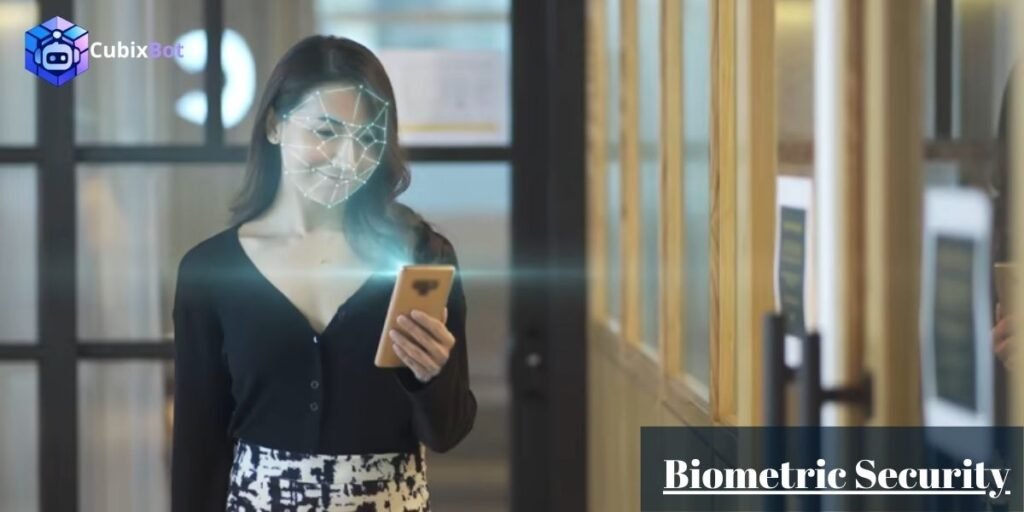
Biometric security uses fingerprints. It scans facial expressions to confirm identity. Biometrics rely on features you cannot lose or forget. It checks identity using personal biological traits. These traits are unique, though hard to copy.
Many companies are moving to passwordless login. Biometrics make access easier and more secure. They protect devices while providing efficiency. The security is tight when using these systems.
A world without keys or cards, just your fingerprint can grant access. Your body becomes the only key. Biometrics uses fingerprints for identification. It also uses facial scans. It provides you with stronger access control.
But is it the right fit for you? Can you put all your trust in biometric security? The biometric market is growing fast. Growth is expected at 13.2% annually. It is expected to grow from $2.87B in 2025 to $16.31B by 2031.
81% of smartphones already use biometrics. The adoption rate of biometric security is growing every single day. 20% of key cards are lost every year. Missing cards create security gaps. Biometrics can reduce these risks.
Traditional systems miss most anomalies. The promise is strong, but challenges remain. GDPR and other privacy laws add limits. Legal compliance cannot be ignored.
1- What Is Biometric Security?
Biometrics uses unique physical and behavioral traits for identification. Biometric systems capture personal features in the form of digital templates for secure authentication.
Unlike traditional credentials, biometrics cannot be lost. Physical presence is required, as it only provides authorized entry.
Biometric software verifies people instantly. The software recognizes individuals without manual input. These systems provide identities in real time. Biometric tools read distinct human features. These features act as proof of identity.
These features include
- Facial recognition
- Finger imaging
- Iris recognition
- Voice recognition
- Palm contours
- Palm vein scan
- Signature dynamics
Fingerprint recognition is the most common method. Many systems prefer fingerprints because they are lower cost. Multispectral models provide better results. Many choose multispectral for higher performance.
They cost more but improve accuracy. Extra cost brings greater precision. Systems also use finger vein scans. Systems also use finger vein scans. Systems also use finger vein scans. Iris scanning adds stronger security.
Multiple biometric identifiers exist. Critical facilities choose Iris first. Some systems use multiple verification methods. Advanced systems confirm identity strictly.
2- How Biometric Security Works
- Enrollment
The enrollment stage captures biometric data using a scanner. Devices collect distinct biological patterns.
Unique features are extracted from the scan. Raw data is turned into encrypted code. The system converts them into a secure template. No visual image is kept.
Templates are saved in secure memory. Several samples may be combined. Repeated scans ensure reliable matching. This improves recognition accuracy.
- Authentication
During login, a new scan is taken. Software compares it to stored records. A score determines the result. Algorithms calculate a similarity score.
If the score meets the threshold, access is allowed. Low scores block entry. Minor changes like lighting are considered. PIN codes can act as backup. Liveness checks stop fake attempts.
- Integration
Biometric tools integrate using open standards. Systems adopt WebAuthn for web access. Hardware connects via secure APIs. FIDO2 supports secure authentication. FIDO2 supports secure authentication.
FIDO2 supports secure authentication. Biometrics combine with MFA systems. Biometrics combine with MFA systems.
Biometrics combine with MFA systems. Templates remain stored locally. This supports banking and access control. Modular solutions fix legacy limitations.
Components Of The System
- Hardware
Biometric hardware gathers identity data. The hardware consists of biometric scanners and access controllers. Sensors collect physical identity data. Controllers manage electronic door locks.
Iris cameras capture eye details. Facial devices verify visual features. Hardware connects to security monitoring systems. Security links extend to alarms and cameras.
- Software
The software handles identity processing. Software converts scans into secure formats. It compares live input with saved data. Matching algorithms compare live data. Permissions control user access levels.
Security relies on encrypted storage. Approval depends on set thresholds. Deep learning improves accuracy. Advanced models refine accuracy. Multi-factor authentication may be supported.
- Audit Features
Audit tools record every access event. The system tracks all authentication activity. All events include timestamps. Reports help track suspicious activity. Anomaly detection improves oversight.
Reports assist in investigations. Tamper-proof storage ensures integrity. Data feeds into larger security systems.
3- Types Of Biometric Security Systems
Biometric systems verify identity using measurable human traits. Three common types of fingerprint scanners include fingerprint scanning, facial recognition, and iris or retinal identification. Each solution serves different security needs depending on the security level.
- Fingerprint Scanners
Fingerprint scanners record users by scanning fingerprint ridge patterns. A sensor creates a precise digital blueprint during registration. The system stores them as mathematical templates.
This template ensures reliable identification later. A fresh fingerprint scan creates a comparison model. The generated data is matched against stored biometric profiles. Advanced sensors strengthen accuracy.
- Low-cost implementation with quick processing.
- Ideal for high-volume access points.
- Manual labor may damage ridge clarity.
- Injuries may disrupt recognition.
- Environmental factors can interfere with scans.
- Easily integrates with PIN codes.
- Adds layered verification options.
- Security improves with liveness detection.
- Facial Recognition
Facial recognition analyzes geometric facial features captured through cameras. The technology scans facial structure from 2D or 3D images. Software detects structural landmarks to create a faceprint. Verification compares it against stored data. Matching occurs instantly.
- It works quickly in crowded spaces.
- Ideal for airport payments.
- Poor lighting impacts accuracy.
- Accuracy varies with camera quality.
- Sensitive due to the scale of data collection.
- This faces regulatory scrutiny.
- Iris/Retinal Scans
The iris system maps complex eye patterns invisible to normal sight. Retinal technology scans blood vessel arrangements. Iris scanning works from a short distance. These templates are extremely unique. These characteristics remain consistent over time.
- It is suitable for labs with broader control.
- It provides the highest biometric accuracy.
- Setup requires specialized hardware.
- Retinal scans may feel intrusive.
- Acceptance rates may vary.
4- Benefits Of Biometric Security
Biometric security delivers major benefits. It provides strong identity verification. It improves security while increasing convenience. It reduces operational budgets. The scalable design makes it suitable for all types of businesses.
- Security
Biometrics removes the need to keep up with credentials. It simplifies access with fingerprints or facial recognition. A simple touch or glance confirms identity instantly. Fast authentication improves both efficiency and user confidence.
- This removes login frustration.
- The authentication happens within seconds.
- It enables passwordless logins.
- It supports multiple devices.
- It reduces the chances of errors from typing on small screens.
- Lower Fraud Risks
Biometric security protects against fraud. Biometric identifiers cannot be shared. Fraud attempts decline automatically with biometric verification. This creates a tamper-resistant authentication layer.
- This reduces phishing attacks.
- This prevents stolen credentials from being reused across platforms.
- Multi-factor integration strengthens protection against cyber threats.
- Cost Saving
Biometric systems reduce long-term expenses. Initial investments are offset by reduced IT support costs. Biometrics eliminates the need for password management resources. They decrease physical dependency on security.
- Organizations benefit financially from security provisions.
- Biometric integration streamlines compliance, which reduces the cost of breaches.
- It allows you to stay compliant with KYC.
- Fraud detection reduces major financial losses.
- Scalibility
Biometric security enables centralized control. Scalable frameworks support multiple authentication types. This makes biometrics suitable for global apps. Real-time updates maintain consistent security standards.
- Organizations can upgrade without rebuilding infrastructure.
- Integration with HR ensures the secure expansion.
- It reduces the performance issues.
5- Challenges Of Biometric Security
- Privacy Trouble
Biometric systems raise serious privacy risks. The information is unique, though permanent. Systems store highly personal identifiers. A single breach can affect thousands of users. The affected databases attract cybercriminals. Stolen data cannot be replaced like passwords.
- Data may be reused without proper consent.
- Function creep threatens user trust.
- Strict safeguards must be implemented.
- High Costs
Biometric systems require expensive hardware. Initial deployment costs are very high. Biometric technology requires advanced infrastructure. Enterprises must invest in secure databases. Small businesses may struggle financially.
- Integration efforts require skilled developers.
- System redesigns add huge costs.
- Ongoing monitoring requires resources.
- Employee training is required.
- Accuracy Issues
No system guarantees 100% precision. Accuracy varies across conditions. Recognition technology has limitations. Recognition errors create inconvenience. Environmental factors lower reliability. They may also reject legitimate users. Aging can alter biometric features.
- Injuries can change fingerprints.
- Algorithms may show bias.
- Multiple authentication layers increase complexity.
- Errors reduce confidence in the system.
- Integration Issues
Integration is technically complex. Organizations face interoperability challenges. Switching from passwords to biometrics is difficult. Different data formats limit compatibility. APIs may not match legacy systems. Custom development increases workload.
- Network delays affect performance.
- Poor integration creates security gaps.
- Strategic implementation is essential.
- Regulatory Hurdles
Biometric data is legally sensitive. Governments treat biometrics as special data. Legal frameworks regulate biometric storage. Companies must encrypt stored data. Users can request data deletion. Access controls must be enforced.
- Audits may be required.
- Documentation proves compliance.
- Global deployment requires legal adaptation.
- Failure risks legal action.
6- Best Practices For Biometric Protection
Biometric systems work with the recognition of personal traits. Organizations must treat biometric data as highly sensitive. Best practices reduce operational harm.
- Select Vendors
Reliable vendors protect biometric templates. Security begins with trusted partners. Review audit reports carefully. Evaluate their breach history. They maintain anti-spoofing defenses. Test systems for weaknesses.
- Ensure encryption standards meet requirements.
- Confirm liveness detection capability.
- Due diligence prevents hidden risks.
- Secure Your Data
Protect biometric data at every stage. Make your privacy assessments. Encrypt your data using AES-256. Use hardware security modules. Apply cancelable biometric templates. Monitor access logs daily.
- Control admin privileges tightly.
- Prevent unauthorized internal access.
- Ensure secure template design.
- Train Your Users
Employees must understand biometric policies. General users need usage guidance. Offer workshops and video modules. Highlight hygiene practices for scanners.
- Encourage prompt reporting.
- Engage users with real examples.
- Update training with new threats.
- Start With Testing
Test integration with existing systems. Monitor error patterns closely. Measure response time. Track spoofing detection accuracy.
- Document pilot findings.
- Review system logs carefully.
- Scale based on evidence.
- Compliance
Compliance reduces legal risk. Regulations evolve constantly. Strong compliance avoids penalties. Conduct internal compliance audits. Document vendor agreements.
- Record deletion logs.
- Keep audit trails organized.
- Review breach insurance coverage.
Conclusion
Biometrics provide a convenient way to verify identity. It replaces traditional passwords for faster authentication. Biometrics are convenient. They reduce the chances of phishing attacks. Technical safeguard is necessary for security. Privacy rules minimize breach risks. Proper implementation keeps data safe.