
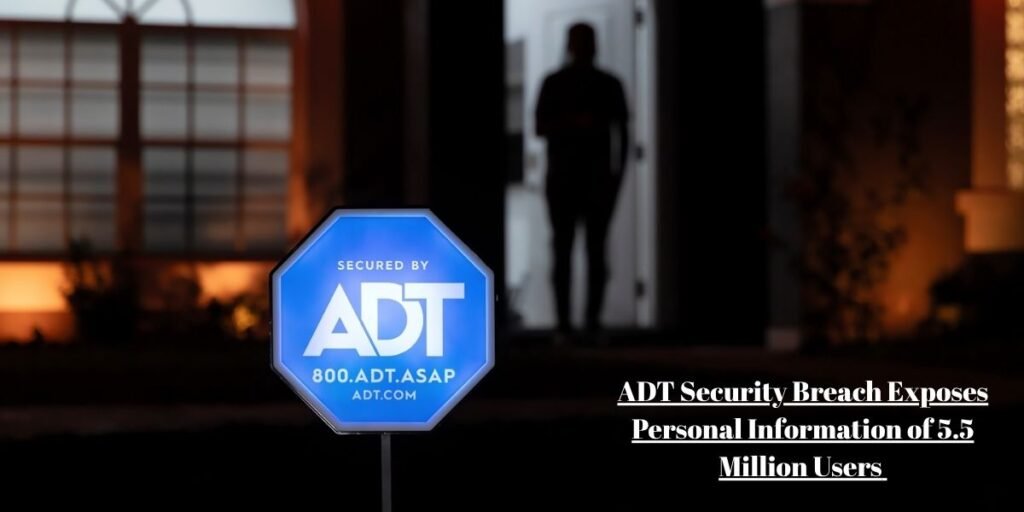
Home security provider ADT disclosed unauthorized network access that exposed personal files belonging to current customers and prospective clients. Independent breach tracking via Have I Been Pwned subsequently mapped the incident to approximately 5.5 million unique email addresses, with threat intelligence investigations linking the operation to the ShinyHunters extortion syndicate.
For millions of households relying on the company, the distinction regarding the stolen data matters immensely. The event compromised personal identification details, while ADT affirmed that individual customer alarm hardware and payment card vaults remained secure.
About ADT: A Home Security Giant
Founded in 1874 as the American District Telegraph, ADT operates as the largest and most recognizable residential and small-business security provider in the United States.
The enterprise model covers comprehensive security infrastructure:
- Residential and small-business professional monitoring
- Physical alarm panels, window sensors, and glass-break detectors
- Indoor and outdoor smart-home video surveillance cameras
- Connected mobile applications for remote property management
Serving over 6 million active customers, the corporation maintains deeply sensitive records tied to physical addresses, occupancy schedules, and personal identities.
The core operational paradox centers on trust. A brand built entirely around guarding physical perimeters must simultaneously protect the vast digital ledger of customer telemetry required to run those services.
ADT Discloses Unauthorized Access to Customer Data
The official corporate timeline began on April 20, when automated monitoring solutions flagged unusual activity inside cloud environments.
The organization initiated emergency containment procedures by terminating the active intrusion vector, deploying independent third-party forensic investigators, and alerting federal law enforcement.
Public disclosure followed via corporate updates and regulatory filings.
The formal statements established that unauthorized actors extracted a defined repository of consumer records.
Management emphasized that containment protocols successfully locked down the perimeter, preventing widespread system manipulation or alterations to active security monitoring centers.
How the ADT Attack Unfolded
Moving past official announcements, technical tracking reveals a targeted intrusion path executed with speed and precision.
The sequence began with an external threat actor targeting an individual employee through targeted social engineering.
Once the staff member’s identity was compromised, the intruders leveraged valid Okta single sign-on (SSO) credentials to enter internal corporate architecture.
From that authorized access point, the actor pivoted directly into a cloud-hosted Salesforce environment where customer data resided, rapidly extracting large volumes of records before detection.
While corporate statements outline the defensive reaction, external intelligence reports from security analysts and threat actors map out the exact progression from a phone call to a massive data harvest.
The Vishing Attack Behind the Breach
The intrusion did not exploit zero-day software vulnerabilities or crash network firewalls. It bypassed technical perimeters by targeting the human element through voice phishing (vishing).
Attackers placed real-time phone calls to corporate personnel, impersonating trusted internal IT support or administrative authorities.
Through psychological manipulation and urgency, the callers tricked the staff member into revealing multi-factor authentication codes or approving login prompts.
This social engineering vector demonstrates why human identity has become the preferred target for advanced extortion groups.
Obtaining legitimate credentials allows an attacker to walk straight through digital front doors, rendering heavy perimeter defenses entirely irrelevant.
How Okta and Salesforce Fit Into the Attack
The mechanics of the breach relied heavily on enterprise software integration.
Okta functions as an identity and access management provider, utilizing single sign-on (SSO) to let employees access multiple corporate tools using one set of credentials.
Salesforce serves as a primary cloud customer relationship management repository, holding comprehensive contact databases, service histories, and account files.
When the attacker hijacked the employee’s Okta session, they inherited every permission tied to that corporate profile.
The vulnerability did not stem from a software flaw in Salesforce or a compromised database protocol in Okta.
Instead, the incident underscores how legitimate cloud convenience can become an adversary’s highway when a single enterprise identity falls.
What Information Was Exposed
Public notifications and regulatory disclosures confirmed that the unauthorized data extraction involved specific demographic fields.
The compromised records included:
- Customer and prospective customer names
- Primary phone numbers
- Residential and business physical addresses
- Dates of birth in a restricted percentage of files
- The last four digits of Social Security numbers or Tax IDs for a small subset of accounts
Conversely, corporate audits verified critical boundaries regarding what remained untouched.
Payment card records, bank account numbers, and financial billing histories were not accessed.
Furthermore, active consumer monitoring frameworks, smart-home automation setups, and physical alarm hardware remained fully secure and operational.
What Does the 5.5 Million Figure Represent?
Initial public reporting and external breach tracking platforms established a massive scale for the incident, identifying approximately 5.5 million unique email addresses linked to the leaked files.
This figure represents distinct database entries analyzed by security researcher Troy Hunt via Have I Been Pwned, rather than a casual company-wide confirmation of active accounts.
The dataset combined active subscriber accounts, historical billing profiles, and prospective customer leads accumulated across marketing pipelines.
This total sits apart from the threat group’s broader assertion that over 10 million total data rows were gathered, illustrating why data breach metrics require separating raw file row counts from verified individual identities.
What Was Not Compromised
Given the brand’s core function, customer anxiety centered immediately on physical safety and financial exposure.
Official findings confirmed that payment-card information was completely untouched, protecting users from direct credit fraud via this vector.
Most importantly, customer security systems remained unaffected.
An intrusion into corporate customer relationship databases does not equate to remote control over home locks, security cameras, or window sensors.
Disabling alarm codes or disarming residential perimeters requires entirely different access pathways that stayed isolated from the enterprise cloud environment.
Why an ADT Data Breach Carries a Different Risk
A database disclosure involving names and phone numbers carries unique dangers when the impacted organization protects physical homes.
Possessing a target’s residential address alongside security provider history enables highly sophisticated social engineering attacks.
Real-world risks materialize through targeted impersonation scams:
- Fraudulent phone calls from actors posing as technical support, claiming an urgent hardware failure requires immediate verification
- Fake technician dispatch notices designed to manipulate homeowners into lowering defenses
- Custom phishing messages referencing exact home addresses to trick users into handing over mobile app passwords or multi-factor codes
The primary danger is not a burglar utilizing coordinates from a leak file, but rather digital fraudsters leveraging brand trust to extract sensitive credentials over the phone.
ShinyHunters and the Data Theft Extortion
The cybercrime collective known as ShinyHunters claimed public responsibility for the intrusion, listing the security provider on its dark web extortion portal.
The group operates as a prolific data theft syndicate specializing in corporate extortion, utilizing double-extortion tactics where corporate networks are breached, sensitive archives are exfiltrated, and leaks are threatened unless ransom demands are met.
Their operational playbook relies heavily on corporate social engineering, targeting business process outsourcers and employee identity portals across major global brands.
While the syndicate claimed theft exceeding 10 million rows and published a compressed data archive following failed ransom negotiations, independent analysts continue to verify the exact scope against corporate disclosures.
ADT’s Previous Security Incidents
The incident follows prior disclosures from August and October of 2024, where unauthorized access impacted portions of employee and customer records.
Those preceding events involved distinct operational vectors, including a third-party database exposure and localized credential compromise.
The recurrence of security events highlights the continuous challenge large consumer-facing enterprises face when securing vast contractor and employee ecosystems against persistent digital syndicates.
The ADT Data Breach Lawsuit
The disclosure triggered swift legal action, resulting in proposed class-action lawsuits filed by affected subscribers.
The complaints allege that the corporation failed to implement adequate data security measures, allowed employee credentials to remain vulnerable to social engineering, and exposed millions to heightened risks of identity theft.
Plaintiffs point to the sensitive nature of home security records as grounds for statutory privacy damages and demands for ongoing credit monitoring services.
Legal filings represent unproven allegations rather than established corporate liability, setting the stage for protracted court battles over digital duty of care.
What the Lawsuit Could Mean for Customers
Class-action litigation provides a legal avenue for affected users to seek restitution for privacy harms, administrative time lost responding to the breach, and out-of-pocket expenses tied to identity defense.
Settlements or judgments in similar data privacy cases often result in court-mandated credit monitoring subscriptions or cash payouts for verified losses.
However, filing a complaint does not instantly establish fault or guarantee individual compensation.
Navigating the legal process typically requires months or years of procedural motions before any binding resolution materializes for registered class members.
What Customers Should Do After the Breach
Defending against the fallout of this incident demands heightened operational skepticism.
Actionable steps for impacted subscribers include:
- Treat any inbound call, text, or email referencing your home security contract with extreme caution.
- Never read multi-factor authentication codes or account passwords to inbound callers, even if they accurately quote your home address.
- Verify unexpected service notifications independently by calling official customer support numbers rather than engaging with inbound contacts.
- Monitor personal credit reports and banking statements for anomalous activity.
- Place a security freeze on credit bureau files if your partial Social Security number was compromised.
- Update primary passwords and enable phishing-resistant multi-factor authentication across personal portals.
What the Breach Reveals About Identity Security
The incident offers a stark operational lesson for the broader cybersecurity industry.
When perimeter defenses harden against software exploits, adversaries pivot toward the path of least resistance: human identity.
The attack chain highlights critical enterprise vulnerabilities:
- Single sign-on concentrations act as master keys if an employee falls for voice manipulation
- SaaS environments holding customer data require strict behavioral monitoring to catch rapid data exfiltration
- Traditional text-based multi-factor authentication fails against real-time vishing and adversary-in-the-middle phishing portals
- Organizations must transition fully to phishing-resistant authentication keys or number-matching app approvals
Where the Investigation Stands
Current facts establish that unauthorized actors breached cloud infrastructure via a compromised employee login on April 20, extracting personal details of millions of users while leaving physical alarms and payment vaults untouched.
Unresolved questions remain regarding the exact total of individual files exfiltrated, the complete internal chain of command failure, and the final legal outcomes of pending class actions.
As forensic reviews conclude, the event serves as a defining case study in how a single phone call can pierce the digital defenses of a multi-billion-dollar security enterprise.
Frequently Asked Questions
What is ADT?
ADT is the oldest and largest provider of monitored residential and small-business security systems, video surveillance, and smart-home automation solutions in the United States.
Did the breach affect 5.5 million customers?
Independent analysis via Have I Been Pwned identified approximately 5.5 million unique email addresses exposed in the leaked database files.
What personal information was exposed?
Compromised fields include customer names, phone numbers, physical addresses, limited dates of birth, and partial Social Security numbers or Tax IDs for a small subset of individuals.
Were alarm systems or cameras compromised?
No. ADT confirmed that customer security systems, smart-home automation equipment, and monitoring networks remained completely unaffected and secure.
Was credit-card information exposed?
No. Payment card numbers, bank accounts, and financial billing records were not accessed during the incident.
How did hackers access ADT?
Threat actors reportedly utilized a voice phishing (vishing) call to trick an employee into surrendering Okta single sign-on credentials.
What is vishing?
Vishing is a form of social engineering where attackers use phone calls to impersonate trusted authorities and manipulate targets into revealing sensitive credentials or security codes.
What role did Okta play?
Okta provided the single sign-on authentication gateway; once attackers hijacked a valid employee login, they used those authorized privileges to navigate into connected cloud applications.
Is the data breach lawsuit still pending?
Yes. Affected consumers filed proposed class-action complaints alleging failure to protect private records, with legal proceedings ongoing.
What should customers do now?
Subscribers should remain vigilant against targeted phone and phishing scams, monitor credit files, ignore unsolicited verification requests, and update account credentials immediately.